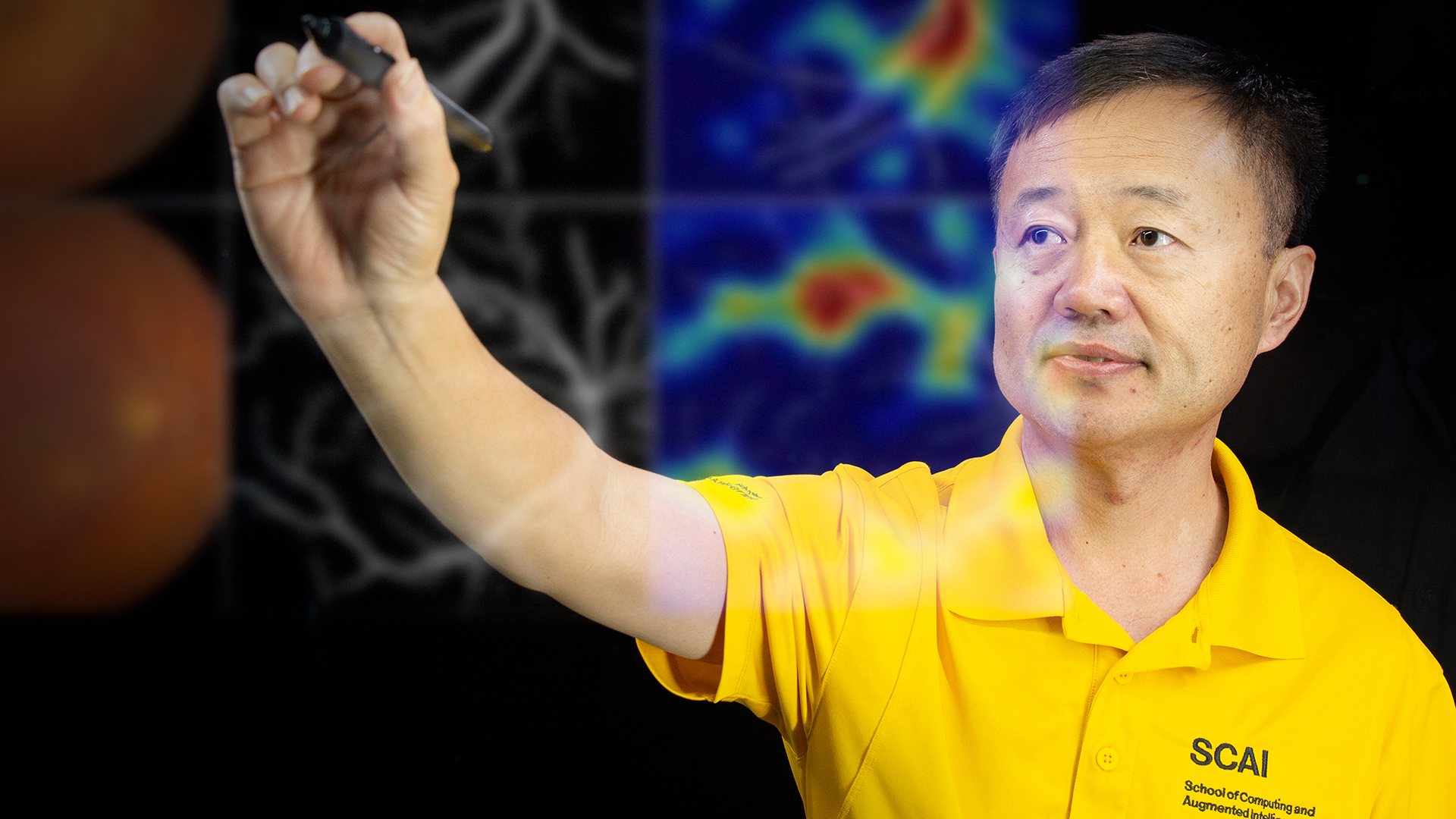
Arizona State University researchers are developing artificial intelligence tools that aim to diagnose Alzheimer’s disease by analyzing retinal images, potentially identifying biological signs before cognitive symptoms manifest. This initiative is led by Yalin Wang, a professor in the School of Computing and Augmented Intelligence, and is supported by a $3.2 million grant from the National Institutes of Health.
Collaboration for Early Detection
Wang is partnering with Dr. Oana M. Dumitrascu, a neuro-ophthalmologist at Mayo Clinic, along with experts from several organizations, including Banner Alzheimer’s Institute and the Translational Genomics Research Institute. The project seeks to enhance the quality of retinal images using deep learning and combine these images with blood biomarkers to better assess individuals’ risks for Alzheimer’s.
The intent of this research is not to replace existing diagnostic methods, such as brain scans or blood tests, but to create a supplementary AI-driven system that leverages retinal images to identify at-risk individuals long before they exhibit symptoms. “The eye can be a powerful window to the brain health,” Dumitrascu noted.
Innovative Approach to Alzheimer’s Research
The retina is biologically linked to the central nervous system, providing a noninvasive method for monitoring brain health. This emerging field, known as oculomics, focuses on using retinal imaging to gain insights into various health conditions, including Alzheimer’s. Timely detection is crucial, as symptoms often appear long after the disease has begun to progress.
Wang highlighted the challenge of identifying individuals in the preclinical stage, noting that current diagnostic tools can be costly and invasive. The project aims to refine the diagnostic process by combining retinal data with demographic information and blood-based biomarkers, particularly those associated with amyloid and tau proteins linked to Alzheimer’s.
Enhancing Retinal Imaging with AI
The research team plans to utilize AI in two ways: first, to improve the quality of retinal images collected in everyday clinical settings, and second, to train deep-learning models to identify patterns indicative of Alzheimer’s risk. Many retinal images collected in community settings are of low quality and may not be usable for analysis, which this project aims to address.
Wang expressed caution regarding the timeline, emphasizing that while the research shows promise, clinical applications will require further validation, trials, and regulatory approval. Nonetheless, the integration of enhanced retinal imaging and blood biomarker analysis could lead to earlier detection of Alzheimer’s, thereby improving opportunities for intervention.
The potential benefits of this research extend beyond early diagnosis; they also encompass the ability to engage individuals in prevention studies and clinical trials at earlier stages of the disease process, which may improve treatment outcomes.
Source: Arizona State University