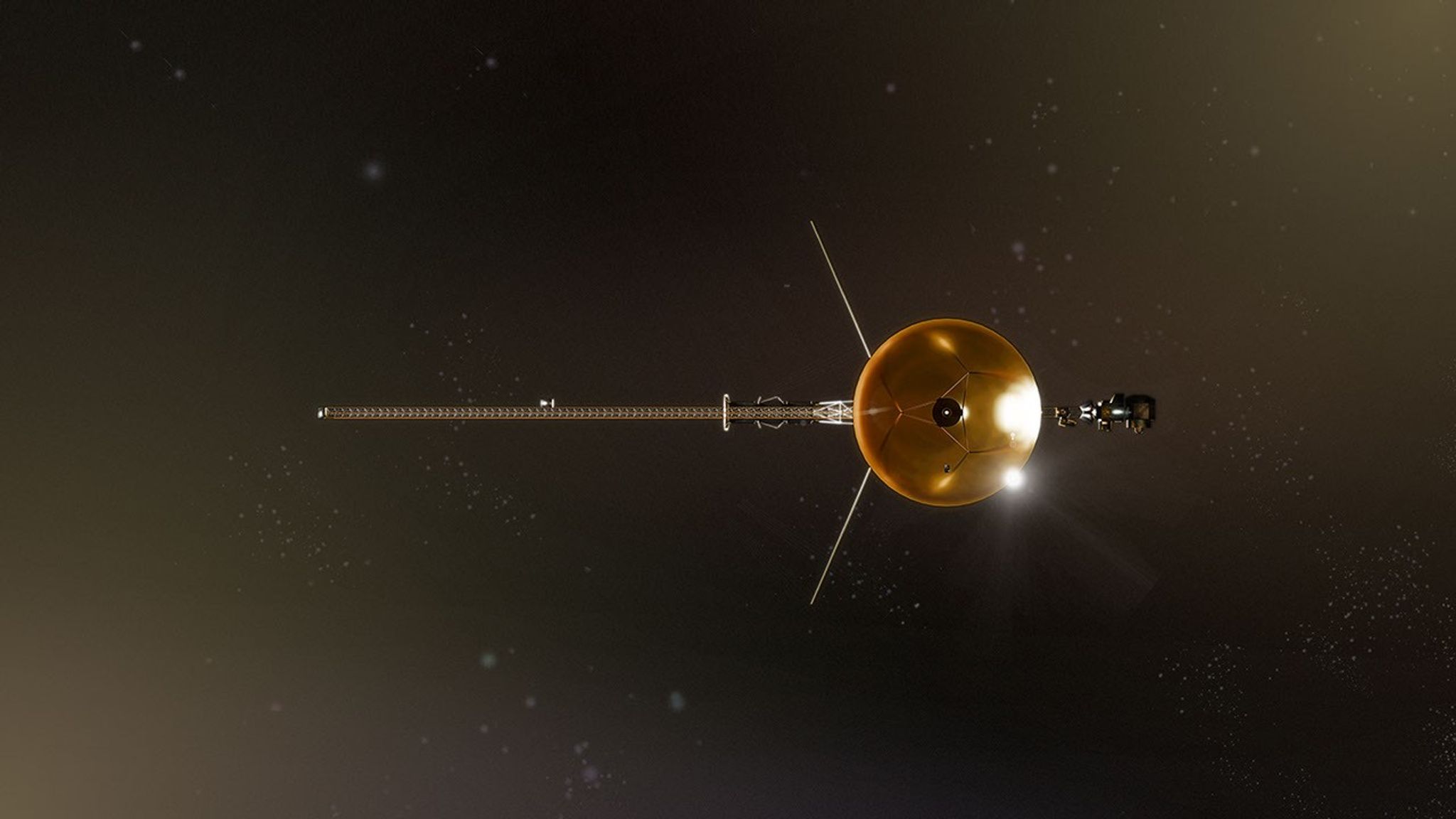
NASA’s Voyager 1 spacecraft is set to reach a significant milestone on November 18, as it will have traveled one light-day from Earth, exceeding 16 billion miles (25.9 billion kilometers). This achievement marks Voyager 1 as the most distant human-made object, with light from Earth taking 24 hours to reach it.
Global Participation Event
To celebrate this historic occasion, NASA is inviting people worldwide to participate in “Shine Bright for Voyager’s Light-Day” on November 17. Following sunset, participants are encouraged to create a visual wave of golden light that encircles the planet. NASA has developed a website allowing smartphones and tablets to emit the Morse code for “VGR,” Voyager’s call sign.
Discussion and Documentary Preview
The following day, on November 19 at 12 p.m. EST (9 a.m. PST), NASA’s Jet Propulsion Laboratory (JPL) will host a moderated discussion featuring members of the Voyager mission and NASA leadership. The event will cover the status of both Voyager 1 and 2, the scientific data they continue to gather in interstellar space, and the challenges of maintaining communication with these distant spacecraft. It will also include a Q&A session with the media and audience members and a preview of the upcoming NASA+ documentary about Voyager, slated for release in 2027.
This event will take place at JPL’s von Kármán Auditorium, where previous Voyager briefings were conducted during its exploration of the outer planets. Participants in the discussion will include Nicky Fox, Jonathan Lunine, Suzanne Dodd, Kareem Badaruddin, and Jamie Rankin.
Voyager’s Legacy
The Voyager mission has been pivotal in space exploration since its launch nearly 50 years ago. Designed to study the outer planets, Voyager 1 entered interstellar space in 2012, while Voyager 2 followed in 2018. Both spacecraft continue to send back valuable scientific data regarding the environment beyond the heliosphere, the protective bubble formed by the Sun.
NASA’s Voyager program is managed by Caltech and operates through JPL, which also oversees the agency’s Deep Space Network, facilitating communication with the spacecraft. The mission is funded by NASA’s Heliophysics Division.
Source: NASA