A recent selection by NASA has awarded funding to 302 innovative projects aimed at addressing key technology needs for lunar and Martian exploration, while also promoting growth in the U.S. space economy. The agency’s Small Business Innovation Research/Small Business Technology Transfer (SBIR/STTR) program has committed up to $171 million in seed funding for these initiatives.
Supporting Lunar and Mars Exploration
The selected projects will focus on various topics, including supporting the Artemis program and establishing a U.S. Moon Base. Innovations range from next-generation battery technologies to advanced robotic systems equipped for the harsh lunar environment. Additionally, tools are being developed for the construction of essential infrastructure, such as lunar landing pads.
NASA’s SBIR/STTR program is designed to assist entrepreneurs, startups, and small businesses in advancing and commercializing technologies that align with the agency’s missions. The latest round of awards encompasses two phases of funding. Phase I contracts will provide up to $225,000 each to validate the feasibility of proposed innovations, while Phase II awards will involve 98 contracts worth up to $1.3 million each, aimed at further developing Phase I projects.
Examples of Innovative Projects
Among the notable projects funded is a Phase II award to Opterus Research and Development Inc., which is creating a modular system of rollable solar arrays intended for use on the Moon and Mars. These solar arrays can be managed robotically and are designed to function in dusty conditions, potentially providing up to 50 kilowatts of power for infrastructure development.
Another project, led by Intelligent Fiber Optic Systems Corporation, received a Phase I award to enhance lunar rover capabilities. Their 10-foot robotic arm features both vision and tactile sensing, enabling it to perform complex tasks autonomously. This technology could streamline operations such as cleaning solar panels and collecting scientific samples.
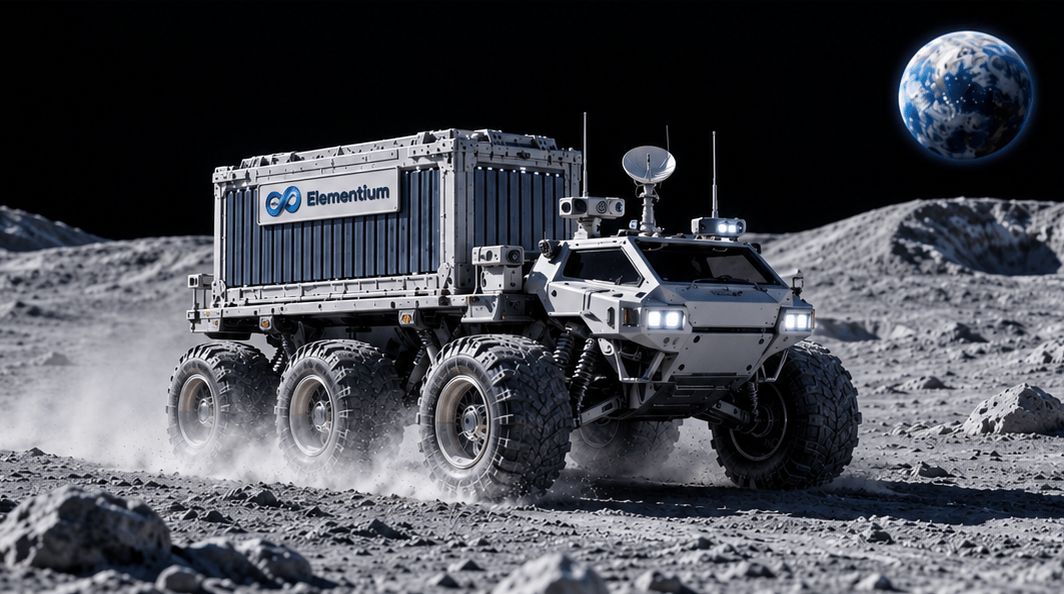
Elementium Materials Inc. has been awarded a Phase I grant for developing an ultra-cold-tolerant battery module. This battery is capable of operating in temperatures as low as minus 76 degrees Fahrenheit without additional heating, making it suitable for the frigid conditions of the lunar night and potentially Mars.
Research on Lunar Landing Pads
A collaboration between Slate Geotechnical Consultants Inc. and the Colorado School of Mines is also being funded to evaluate methods for preparing lunar regolith for repeated landings. This research aims to create sturdy, reusable landing pads that can withstand the force of rocket landings, preventing damage to spacecraft and surrounding infrastructure.
The SBIR/STTR program is part of NASA’s Research and Technology Mission Directorate and is managed by the agency’s Ames Research Center in California.
Source: NASA