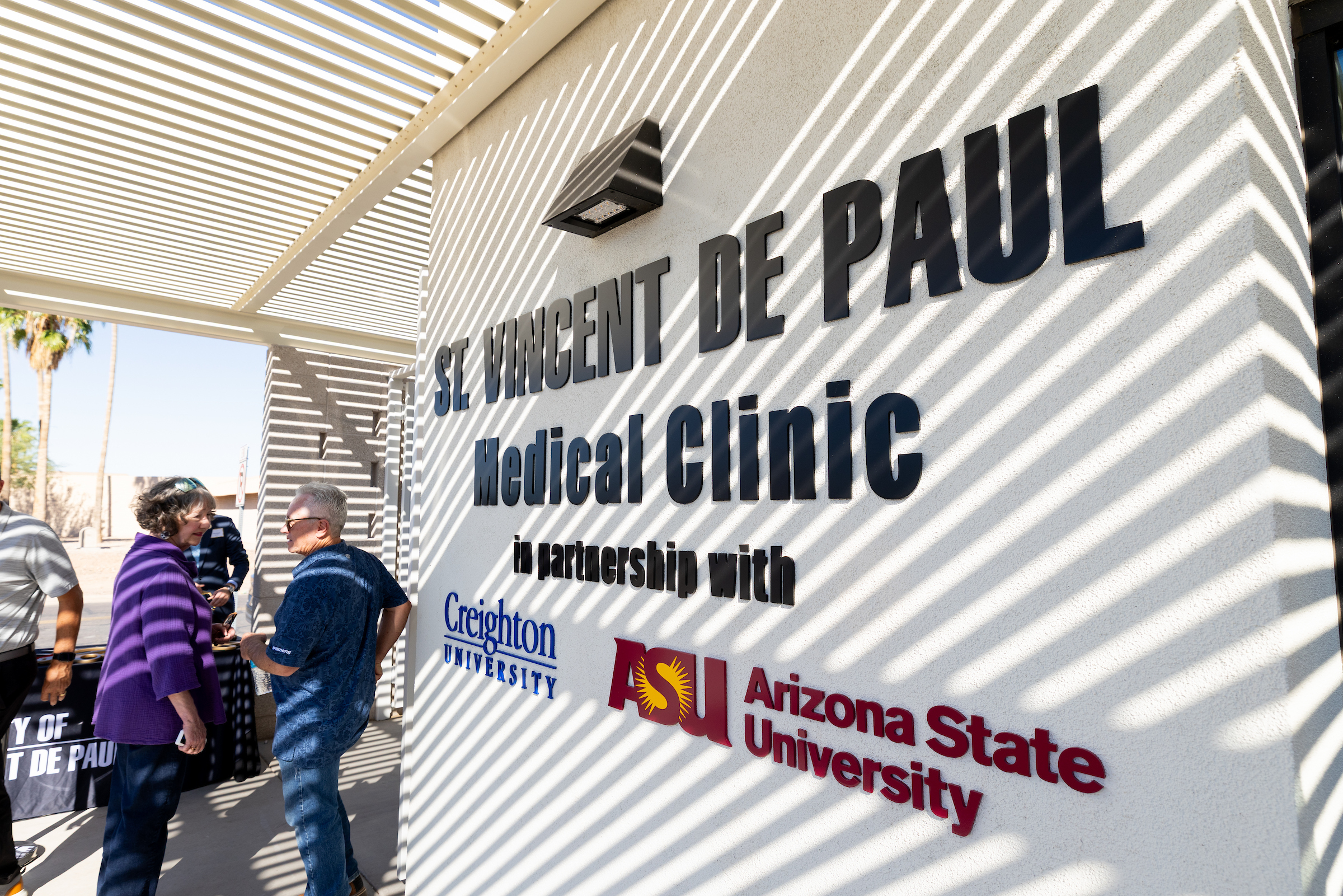
Arizona State University (ASU) has partnered with St. Vincent de Paul to open a new health clinic in Mesa aimed at providing care for uninsured and underserved patients. The St. Vincent de Paul East Valley Medical Clinic was officially unveiled on October 7.
Clinic Overview
The clinic will operate Monday through Friday, from 8 a.m. to 4:30 p.m., and will see patients through referrals and eligibility screenings. Those interested in receiving care are advised to call 602-261-6825.
This 10,100-square-foot facility, located on Apache Road just east of Loop 101, is equipped with 18 exam rooms, a small laboratory, a medication dispensary, and two procedure rooms. It aims to offer comprehensive primary health care services to both adults and children, along with access to over 30 specialists who will provide pro bono services.
Addressing Health Care Disparities
During the opening ceremony, ASU President Michael Crow highlighted critical disparities in the U.S. health care system, noting that over 100 million people are underinsured or underserved. Crow emphasized that immediate action is necessary to improve health care outcomes for this population.
St. Vincent de Paul CEO Shannon Clancy reiterated the urgent need for the clinic, pointing out that approximately 759,000 Arizonans, or 10.8% of the state’s population, lack health insurance. Clancy noted the difficult choices many families face when accessing medical care.
Community Collaboration
The clinic is a collaboration involving multiple partners, including ASU Health, Creighton University, and Mayo Clinic, with support from Banner Health and Blue Cross Blue Shield of Arizona. Dr. Richard Gray, CEO of Mayo Clinic in Arizona, expressed hope that the clinic would help patients receive timely care, stating it could make an “enormous difference” in their lives.
ASU’s involvement in the clinic will extend beyond providing health services; it will also serve as a training site for students from various health disciplines, including medicine, nursing, and public health. Kristen Will, associate dean with ASU Health, mentioned that this initiative would allow students to engage with the community while learning to address health care needs directly.
Future Aspirations
Michael Crow emphasized that ASU’s role is not to operate a medical facility but to collaborate with existing health care systems to enhance community health outcomes. He expressed a desire to build partnerships to improve health care access.
Source: Arizona State University