The School of Hotel and Restaurant Management (HRM) and the Department of Biological Sciences are collaborating to revive the Shand Garden, an outdoor learning space focused on food production and education. The garden, named in honor of late biology professor Richard Shand, was originally established around 15 years ago but saw most of its plants removed last spring due to renovations on the biology building.
Restoration Efforts Underway
With summer construction now complete, a stewardship team has formed to lead restoration efforts. The team includes W.A. Franke College of Business financial analyst Janan Scott, instructional designer Giovanna Macry, and academic advisor Amanda Gonzalez. Their goal is to revitalize the garden while introducing a badging program to assist students in their job searches.
Scott, a master gardener, was approached by HRM’s executive director Mark Molinaro about starting a culinary garden at Northern Arizona University (NAU). During her search, Scott discovered the Shand Garden, which was previously used by a summer botany class that has since been discontinued. She negotiated an agreement between HRM and the College of Environment, Forestry, and Natural Sciences (CEFNS) to maintain and utilize the garden.
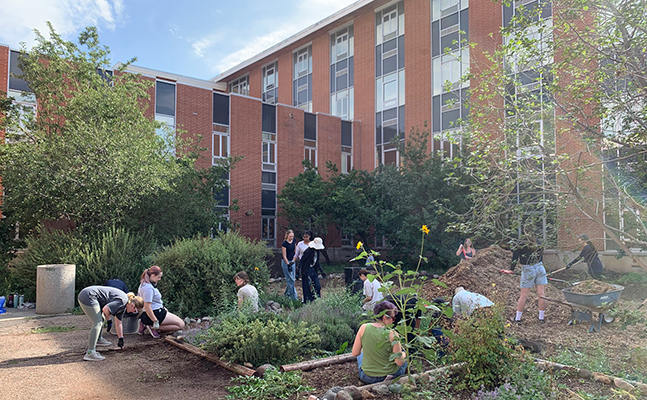
Despite the removal of the original vegetable beds, the partnership is moving forward. Renovation work began last month with the assistance of faculty, staff, and 30 student volunteers from various majors.
Community Engagement and Volunteer Contributions
Biology junior Liz Mott, who has volunteered at the garden for nearly three years, expressed her enthusiasm for the turnout of volunteers. Mott stated that witnessing the community’s commitment to restoring the garden was a pleasant surprise.
Volunteers have been actively involved in various projects, including installing a new planting bed and tree guild with pollinator plants, rebuilding the compost system, and creating a Three Sisters Bed, which will grow corn, beans, and squash. The next phase involves solarizing the field to prepare it for planting next fall.
Learning and Collaboration Opportunities
As restoration progresses, Richard Hodel, an assistant professor in biological sciences, anticipates using the garden for courses like sustainable botany. He emphasized the importance of interdisciplinary collaboration, noting that the garden serves not only as a biological system but also as an educational and communal space. Hodel aims for students to understand the significance of adapting gardens to address environmental challenges, particularly in arid regions like Arizona.
For HRM students, the garden is envisioned as a practical learning environment where they can experience the journey of food from farm to table. Scott highlighted the importance of allowing students to taste freshly grown produce compared to store-bought items, fostering an appreciation for the labor involved in food cultivation.
Future Initiatives and Community Building
The Shand Garden’s badge program is set to launch in Spring 2027, providing volunteers with badges to recognize their skills and experiences, enhancing their resumes for future employment. Macry, who helped design the program, noted that this initiative will engage students in various aspects such as project management and outdoor space maintenance.
Students will not only gain practical skills but also contribute to building a community united by their efforts in the garden. Junior Andrew Kelley, who studies ecology and evolutionary biology, expressed his enthusiasm for participating in a project that fosters collaboration among individuals from diverse backgrounds.
Three restoration events are scheduled for October 2026, offering opportunities for community involvement. Interested individuals can contact Janan Scott for volunteer opportunities.
Source: Northern Arizona University