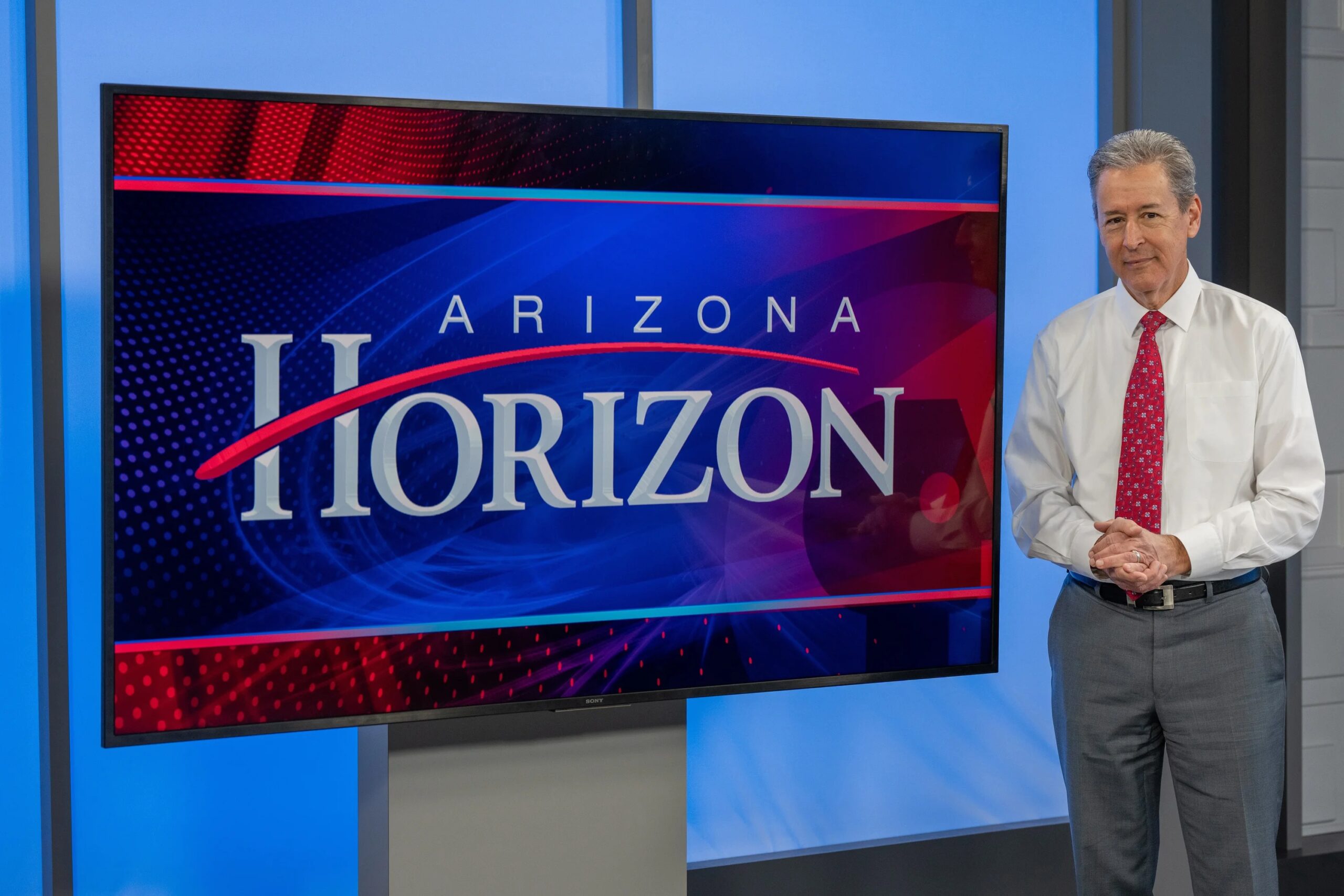
Longtime host Ted Simons will retire from Arizona PBS, effective January 1, 2027. He has served as the host and managing editor of “Arizona Horizon” since 2008, following the retirement of Michael Grant.
Career Highlights
Simons, an alumnus of Arizona State University, has been a trusted broadcast journalist for over 40 years. During his tenure with Arizona PBS, he has interviewed notable figures including Charlton Heston, Itzhak Perlman, U.S. Secretary of State Hillary Clinton, the late U.S. Sen. John McCain, and former U.S. President Jimmy Carter.
He has been instrumental in the democratic process in Arizona, moderating numerous debates and politically focused forums, which have provided voters with direct access to candidates and policymakers. Scott Woelfel, general manager of Arizona PBS, acknowledged Simons’ significant impact, stating that he is trusted by viewers across the political spectrum. Woelfel noted that Simons’ commitment to informing the public has positively influenced civic engagement in the region.
Previous Experience and Accolades
Before his role at Arizona PBS, Simons was the afternoon drive news/talk show host at KTAR radio and served as news director and morning show host at KZON-FM. He also worked as a news/sports anchor and reporter at KPHO-TV and was the sports director and anchor at KOFY-TV in San Francisco.
Throughout his career, Simons has earned numerous awards, including multiple regional Emmy awards, the Arizona Associated Press Broadcasters Association Award, and several New Times Best of Phoenix honors. He is recognized in the National Academy of Television Arts & Sciences Silver Circle for his contributions to broadcasting and the community over more than 25 years.
Future Plans for Arizona Horizon
Arizona PBS will begin a national search for a new host for “Arizona Horizon” in the coming weeks. Woelfel expressed excitement about the future of the program and the potential to better serve Arizonans, while also emphasizing the importance of celebrating Simons’ extensive service to the station and the community.
Source: Arizona State University