Arizona State University (ASU) is enhancing access to advanced computing power through its new ASU AI Research Acceleration Platform (AIR Platform), allowing students and faculty to explore innovative research opportunities. This initiative, supported by a donation from Intel, aims to facilitate quicker processing times while addressing privacy concerns by keeping data within the university’s environment.
Empowering Research and Innovation
The AIR Platform is intended to broaden the university’s research capabilities and has already led to significant developments in less than six months. Sally C. Morton, executive vice president of ASU Knowledge Enterprise and chief research and innovation officer, noted the platform’s potential to help researchers and students across various disciplines. By lowering barriers to advanced AI, ASU aims to foster exploration and accelerate discoveries that could positively impact society.
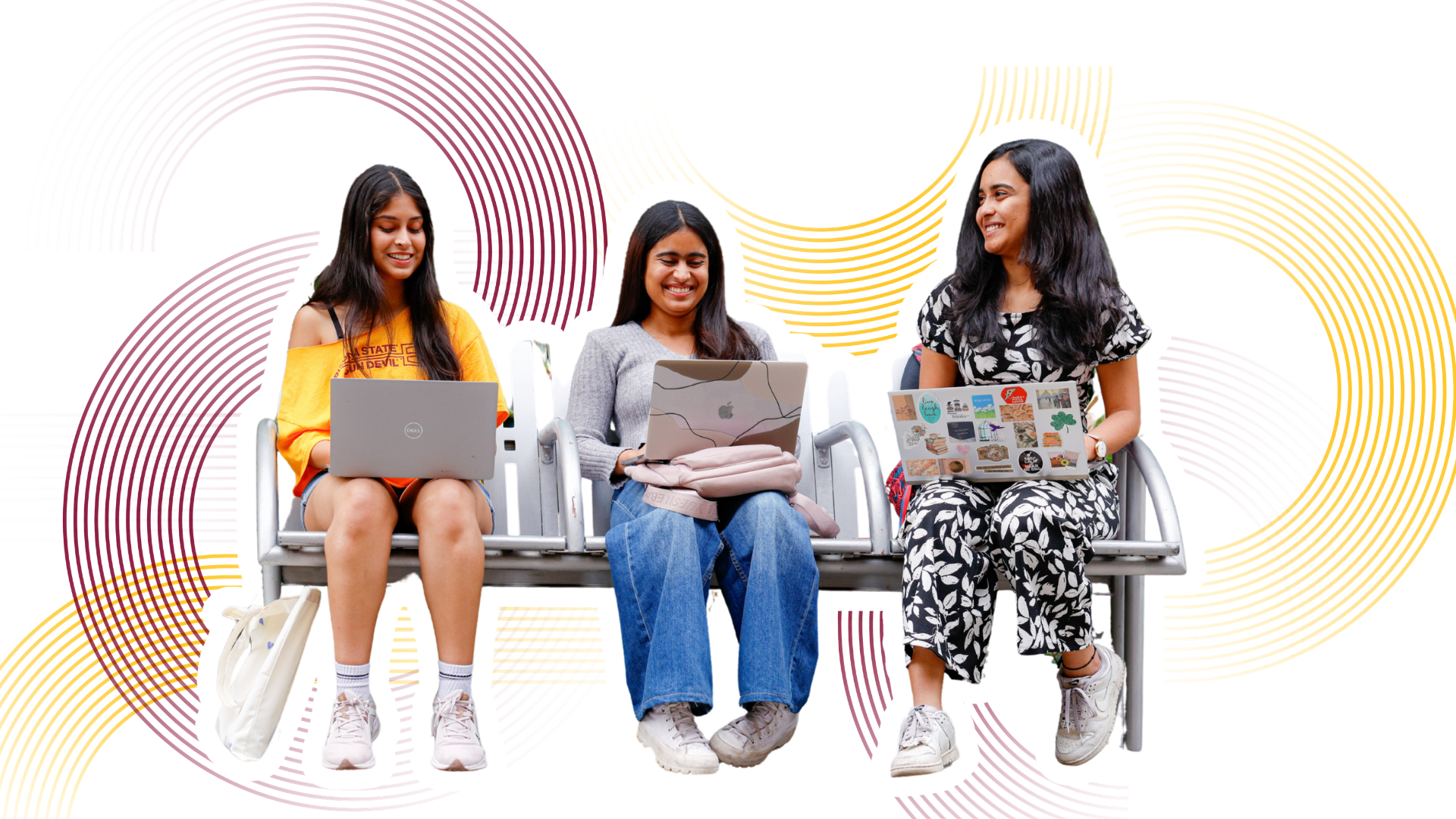
Students are at the forefront of utilizing the AIR Platform, with all ASU students now having access. The primary entry point is through CreateAI, the university’s AI toolkit, which has been utilized by over 55,000 community members. This toolkit includes various AI models, including Google’s Gemma 4, powered by the AIR Platform.
Innovative Student Projects
In August 2026, ASU hosted a hackathon-style Spark Challenge where students collaborated to create applications using the AIR Platform. Among the winners were two master’s students in computer science, Saisrivathsan Manikandan and Shrey Bishnoi, who developed an accessibility tool for individuals with visual impairments. Their tool automates the generation of alt-text for images in PowerPoint presentations, ensuring educational equity.
To date, the CreateAI initiative has facilitated over 300,000 queries from the ASU community, showcasing its broad engagement and utility.
New Developments in AI Research
Several research teams are leveraging the AIR Platform for groundbreaking projects. A group from the School of Computing and Augmented Intelligence is working on an emotionally intelligent customer service agent, using AIR to simulate thousands of scenarios that help the AI recognize various emotions. Their work has led to the creation of a benchmark for training other AI agents, and they will present their findings at the upcoming UserSim workshop at NeurIPS 2026.
Another team from the ASU Beyond Center is employing AIR for predictive modeling in protein research. This research focuses on understanding protein folding and its relationship with atomic composition by analyzing over 20,000 protein sequences. Their findings are in the process of peer review for a prestigious journal.
Classroom Integration of Advanced AI
ASU students will also interact with the AIR Platform through classroom tools this semester. Selected courses will utilize Jupyter Notebook, enabling students to write and execute code linked to AIR. Notably, courses in The College of Liberal Arts and Sciences and The GAME School will incorporate this technology, enhancing the learning experience.
Associate Professor Alex Lee and Assistant Teaching Professor Ahmed Barakat are leading efforts to integrate AIR into the curriculum, focusing on image and video generation models for animation. Barakat emphasized the platform’s ability to provide scalable access to these models, facilitating smoother workflows for students and faculty.
Overall, the introduction of the AIR Platform is set to revolutionize how ASU’s community engages with AI, enabling a wider range of research and educational opportunities while minimizing technical barriers. Faculty and students interested in creating custom AI experiences through CreateAI Builder can explore the platform further.
Source: Arizona State University