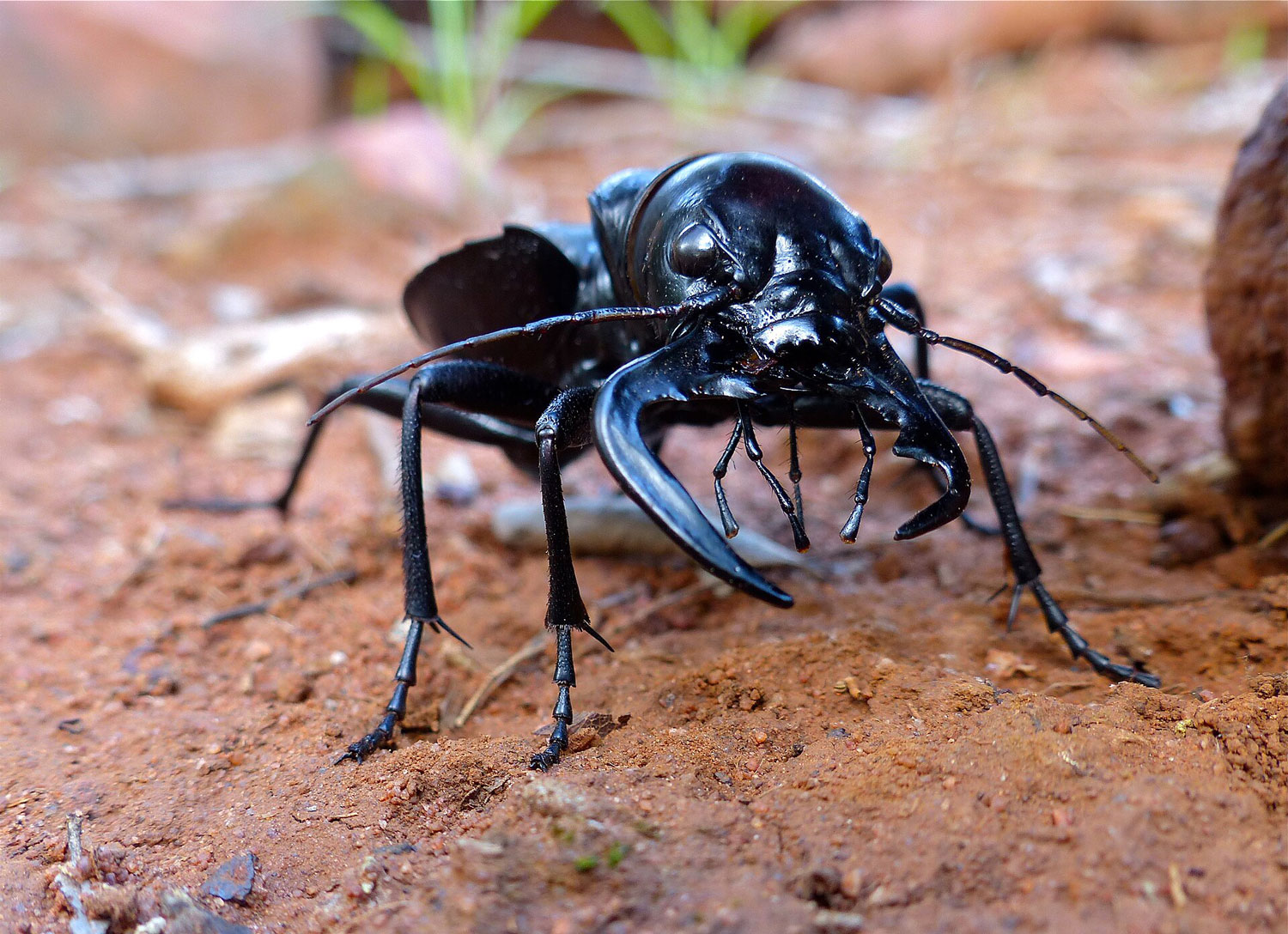
Research by Grey Gustafson, an associate professor in the Department of Biological Sciences, reveals that the ancestors of some of today’s tiger beetles existed in both South America and Africa before the two continents separated. This connection suggests that North America’s largest tiger beetles are related to ancestral giant tiger beetles from South America.
Study Findings Published
Gustafson and his colleagues published their findings in the journal Proceedings of the Royal Society B. Their research centered on two groups of tiger beetles found in the western United States: the giant tiger beetles from the genus Amblycheila and the night stalking tiger beetles from the genus Omus. The team sought to understand their evolutionary history, particularly how they fit into the tribe Manticorini, which includes large-bodied, flightless tiger beetles primarily found in the Southern Hemisphere.
Research Methodology
The research was supported by a four-year National Science Foundation grant. Over three years, Gustafson and his team generated data to explore the evolutionary history of North American manticorine tiger beetles. They collected and compared DNA sequences from newly collected specimens as well as from preserved materials and natural history collections in the U.S. and Europe. Using this data, they created a family tree to identify the most recent common ancestors of these beetles.
Insights into Evolutionary History
Gustafson noted that their findings indicated the lineage of these tiger beetles is older than the separation of the continents. The research showed that North American giant tiger beetles are closely related not only to their South American counterparts but also to species found in southern Africa.
The Vicariance Phenomenon
The results support the hypothesis that lineages with modern diversity in Africa and South America originated when the continents were still connected as part of Gondwana. This geographical phenomenon, known as vicariance, occurs when a barrier forms, dividing populations of the same species between separate landmasses. Gustafson’s research contributes to a broader ecological understanding of evolution, similar to the relationship between rheas in South America and ostriches in Africa. However, the findings on tiger beetles provide a robust example of Gondwanan vicariance.
As the continents separated, they carried their giant tiger beetles along with them.
Source: Northern Arizona University