Amateur astronomers now have the opportunity to contribute to groundbreaking astronomical research through NASA’s Kilonova Catcher project, which seeks to track the fleeting light emitted from neutron star collisions. These collisions, known as kilonovas, play a crucial role in creating heavy elements like gold and platinum in the universe.
Collaboration in Cosmic Discoveries
The Kilonova Catcher project connects volunteers with telescopes to a global network that responds to alerts from gravitational wave detectors and space telescopes. When an event occurs, participants can immediately direct their equipment toward the sky to capture and track the diminishing light from these rare occurrences. In addition to kilonovas, the network also monitors gamma-ray bursts and other transient cosmic events as they become available.
Currently, the Kilonova Catcher network comprises over 150 registered members from various continents. These volunteers collaborate closely with professional astronomers and observatories, having contributed to more than 64 official reports disseminated through NASA’s General Coordinates Network, which facilitates real-time scientific communication. Participants have had their work recognized in peer-reviewed research papers, showcasing the value of their contributions.
Expanding Opportunities for Volunteers
The Kilonova Catcher project is co-led by Cristina Andrade from the Minnesota Institute for Astrophysics and Dr. Damien Turpin from the French Alternative Energies and Atomic Energy Commission. Andrade emphasized the need for more participants. Dr. Turpin added that the enthusiasm and curiosity of amateur astronomers are essential for advancing this field of study.
In addition to observing kilonovas, volunteers have participated in NASA’s lunar Impact Flash! project during the Artemis II mission, recording the brief flashes produced by meteoroid impacts on the Moon’s surface. The network is preparing to assist in following up on thousands of alerts expected from the Nancy Grace Roman Space Telescope, further expanding the scope of citizen science in astronomy.
A Historic Milestone in Astronomy
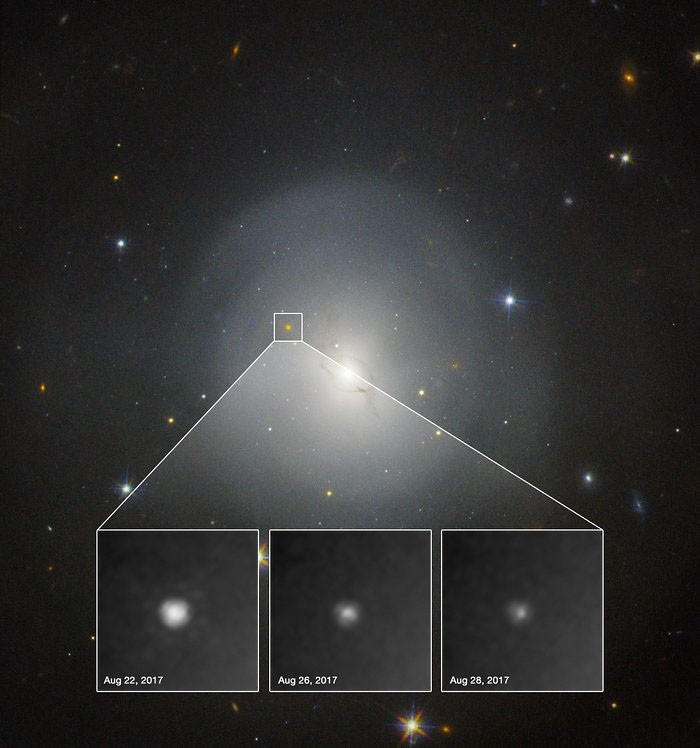
The significance of the Kilonova Catcher project was highlighted during a historic event on August 17, 2017, when gravitational waves from a neutron star collision were detected by LIGO and Virgo. This event marked the first time an optical counterpart to a gravitational wave event was observed, with the associated kilonova tracked over several days using NASA’s Hubble Space Telescope.
For those interested in participating in the Kilonova Catcher project, anyone with access to a telescope equipped with a camera can register to help in these vital astronomical observations.
Source: NASA