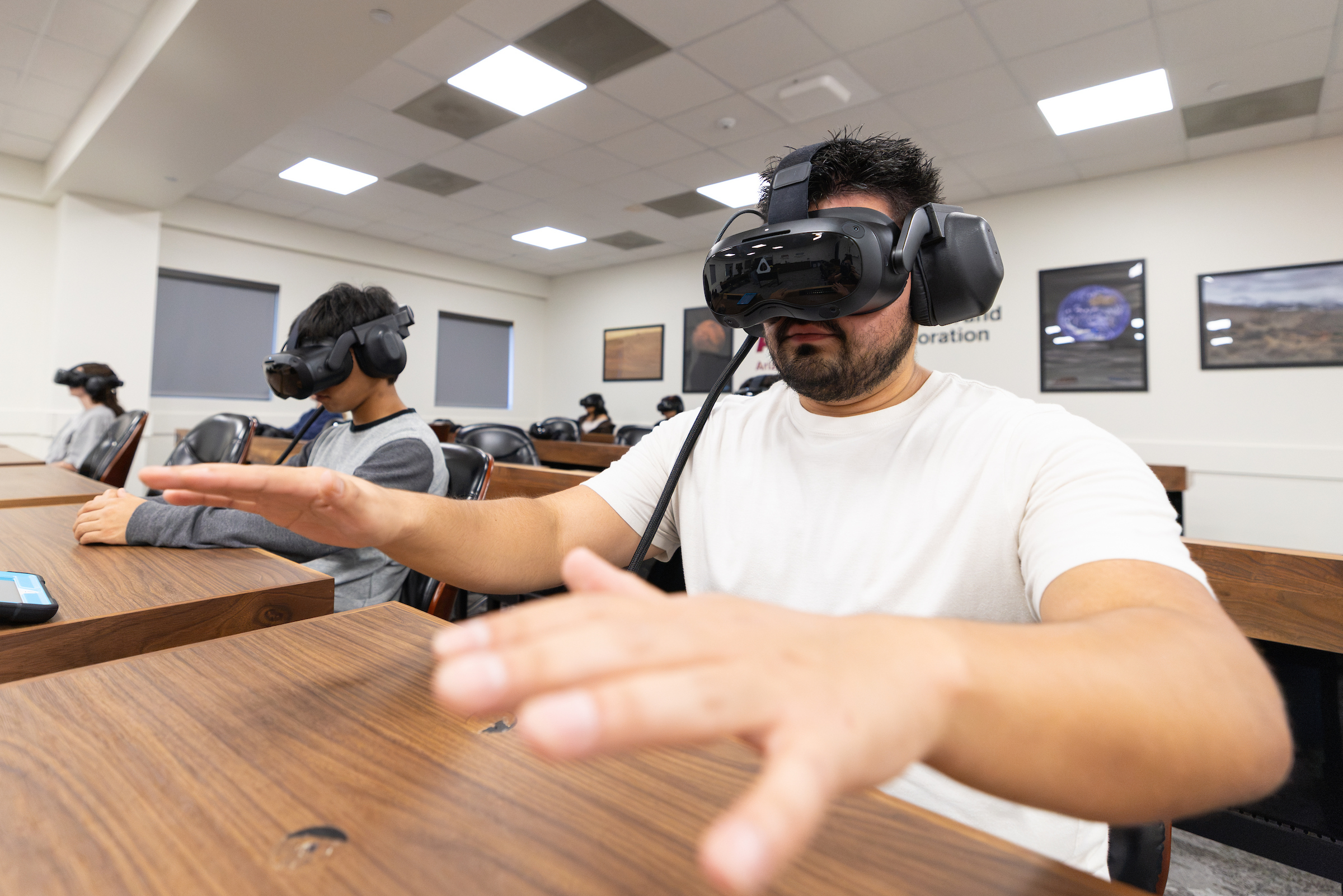
Arizona State University’s Dreamscape Learn has expanded its immersive virtual-reality learning experiences to include art history, chemistry, and astronomy, building on its original focus on biology. This initiative aims to enhance student engagement and performance through innovative educational modules.
Expansion of Dreamscape Learn
Since its debut in 2022, Dreamscape Learn has grown from 18 biology-focused virtual experiences to include a wider range of subjects, with additional modules in development for music theory and microeconomics. Hundreds of students are participating in the current semester’s ARS 101 course, which explores art from prehistory to the Middle Ages, utilizing this cutting-edge technology.
Lisa Flesher, chief of Realm 4 Initiatives at EdPlus, emphasized the initiative’s potential to provide unique educational opportunities. More than 11,000 ASU students are now benefiting from the program each semester, which has also reached K–12 schools and other colleges across the country.
Hollywood Expertise in Education
The immersive experiences are crafted by a team with backgrounds in Hollywood’s animation and sound design, enhancing the educational quality of the modules. John VandenBrooks, associate dean for immersive learning at EdPlus, highlighted the creative expertise involved in developing these experiences, which aim to position students as active participants in their education.
Students like Chelsea Haines, an assistant professor of art history, have observed significant engagement improvements during pilot sessions. The modules allow students to take on roles such as research assistants, enhancing their understanding of historical concepts through immersive experiences.
Student Experiences and Success
Students participating in the art history module have expressed enthusiasm for the immersive learning format. Alejandro Anaya, an art major, noted that the experience felt lifelike and engaging, while Maci Minardi, an art education major, was delighted to virtually explore significant historical sites like the Tomb of Seti and the Hagia Sophia.
Data from ASU’s Action Lab indicates that students who engaged with Dreamscape Learn modules in biology demonstrated improved academic performance. Analysis of over 4,000 students found high ratings for the virtual reality experiences and significant gains in course grades, suggesting a positive impact on student retention in science majors.
As Dreamscape Learn continues to evolve, students like Anaya hope to see its application broadened across other disciplines, emphasizing its value as an effective educational tool.
Source: Arizona State University