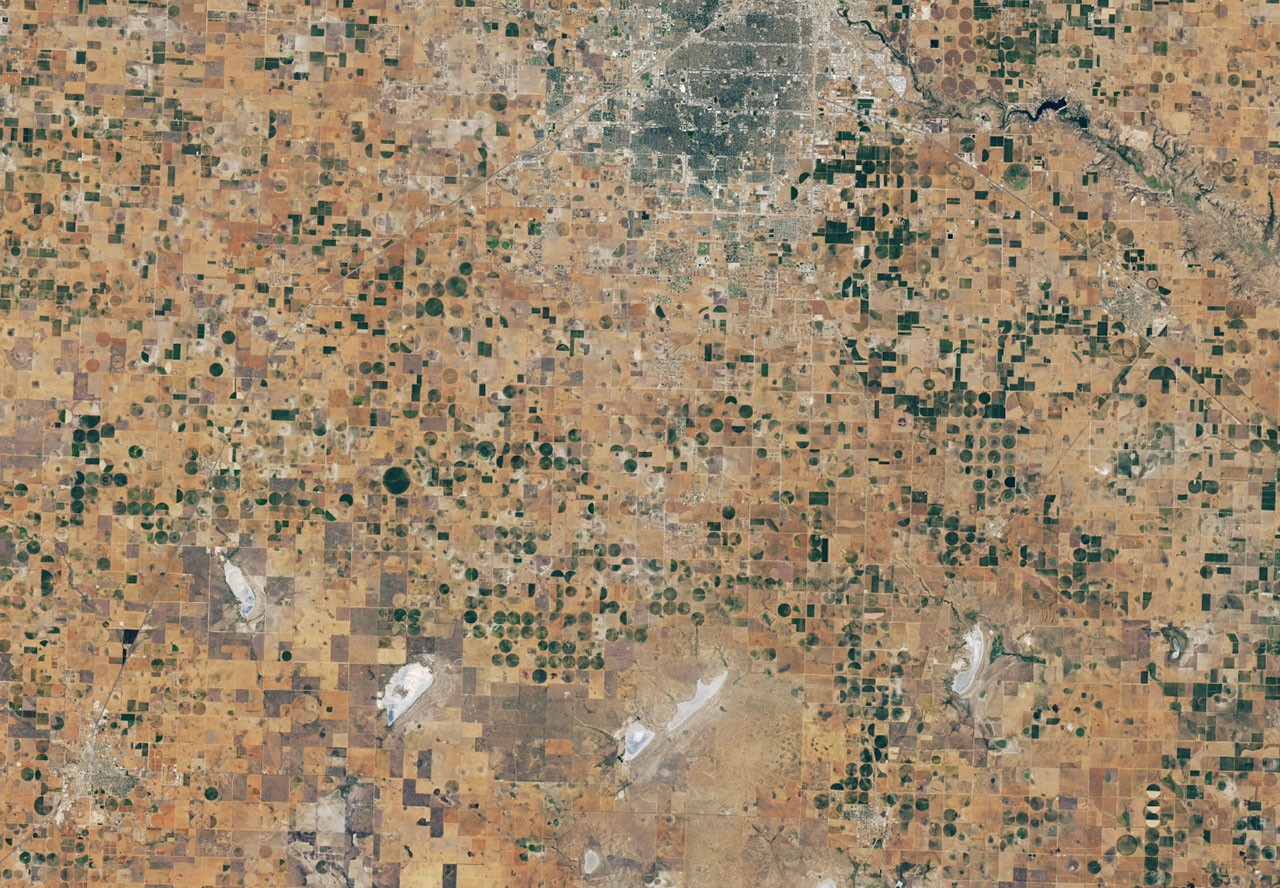
A severe drought in the Texas High Plains has devastated cotton crops, with reports indicating that many farmers are facing unprecedented challenges. Satellite imagery from NASA highlights the stark contrast between agricultural conditions in September 2025 and September 2026, showing a significant decline in green vegetation and water availability in the region.
Impact on Cotton Farming
Farmers in the Lubbock area are grappling with the consequences of the 2026 drought, which has resulted in the death of cotton crops. Lacy Cotter-Vardeman, a farmer in the region, reported that approximately 90 percent of her dryland cotton has perished. This year’s drought has been particularly harsh, prompting memories of previous catastrophic harvests in 2011 and 2022 when substantial portions of crops were also abandoned.
Imagery captured by the Operational Land Imager on Landsat 8 shows the barren landscape of Lubbock County, contrasting sharply with the healthier fields of the previous year. The observable decline in vegetation and the drying up of playa lakes, essential for groundwater recharge, underscore the severity of the situation.
Groundwater Challenges
The drought has exacerbated issues related to the High Plains aquifer, which has experienced significant depletion over the years. Data from the U.S. Geological Survey reveals that the water table in Lubbock County has dropped between 25 and 100 feet since 1950 due to extensive irrigation practices. This decline, combined with the current drought conditions, has left many wells unable to provide sufficient water, leading to concerns about the future viability of farming in the region.
Many farmers, like Tillery Timmons-Sims, have begun to adapt their practices by reducing the amount of land they irrigate. The drought’s impact is so severe that some wells have stopped functioning altogether. “We simply don’t have groundwater to fall back on anymore,” Timmons-Sims said.
Efforts to Mitigate Drought Effects
Despite recent rains attributed to a strong El Niño, experts indicate that significantly more precipitation is necessary to alleviate the drought conditions. According to Jonathan Case, a meteorologist at NASA, more than seven additional inches of rain are required over a three-month period to effectively end the current drought in the area.
In response to these challenges, Timmons-Sims has shifted her focus from farming to supporting sustainable agricultural practices. She is involved in initiatives that promote water-efficient techniques and the conversion of irrigated lands to grasslands to earn water credits. Collaborative efforts between farmers and NASA scientists aim to leverage satellite data to improve agricultural decision-making in the face of ongoing water scarcity.
Source: NASA