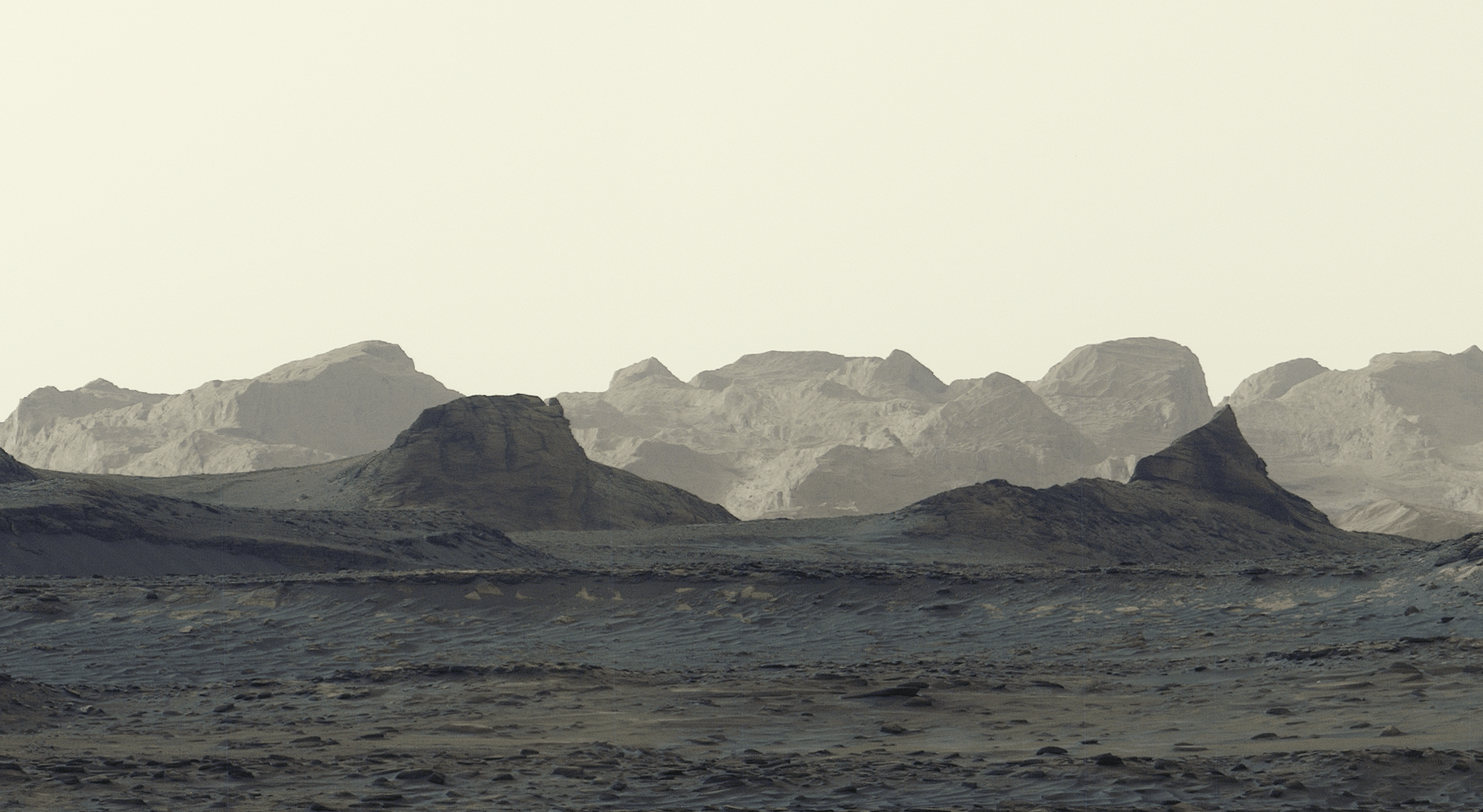
A new panorama from NASA’s Curiosity rover has provided an unprecedented view of Martian yardangs, wind-carved cliffs that scientists have eagerly anticipated studying up close. Captured on August 11, the images showcase striking blue hues and the distinctive shapes of these geological features illuminated by morning light.
Detailed Panorama Captured
The panorama, taken at 8:30 a.m. local Mars time, consists of six images combined after being transmitted to Earth. This particular image differs from most others captured by Curiosity’s Mastcam, as it was processed without white balancing, allowing the natural early morning colors to be retained.
The yardang layer spans approximately 10 miles across the northwestern region of Mount Sharp, a 3-mile-tall mountain that Curiosity has been exploring since 2014. Recently, the rover reached a significant milestone, climbing to an elevation of 0.6 miles, marking its highest point on Mars to date. As it approaches the yardangs, scientists anticipate obtaining more remarkable images and potentially uncovering the origins of these formations.
Geological Insights from Mount Sharp
Mount Sharp is layered, each stratum revealing a different epoch of Mars’ geological history. Research into these layers has provided insights into ancient lakes and streams that once existed on the Red Planet. As water receded, it left behind salt minerals, and subsequent wind activity may have sculpted the yardangs from these remnants.
According to Ashwin Vasavada, the project scientist for the Curiosity mission, the yardang layer appears anomalous due to its color and the angle of its layers. He noted that while the exact cause of its formation remains uncertain, one hypothesis suggests it could be ash from ancient volcanic activity.
Future Exploration Plans
Curiosity is currently in the second year of its fifth extended mission, which includes an investigation of sulfate and carbonate-rich layers indicative of the planet’s drying history. Scientists aim to reach the base of the yardangs by 2027, where Curiosity’s robotic arm will be employed to gather unique data on these intriguing geological features.
NASA’s Jet Propulsion Laboratory, which manages the Curiosity mission, is based in Pasadena, California. The rover was constructed as part of NASA’s Mars Exploration Program, with its imaging system developed by Malin Space Science Systems in San Diego.
Source: NASA