The James Webb Space Telescope (JWST) has provided new insights into the processes affecting young stellar systems, particularly through its examination of extreme debris disks, according to findings published in The Astrophysical Journal. These collisions are relevant to understanding the early history of our own solar system, which is thought to have experienced similar significant impact events.
Insights into Stellar Evolution
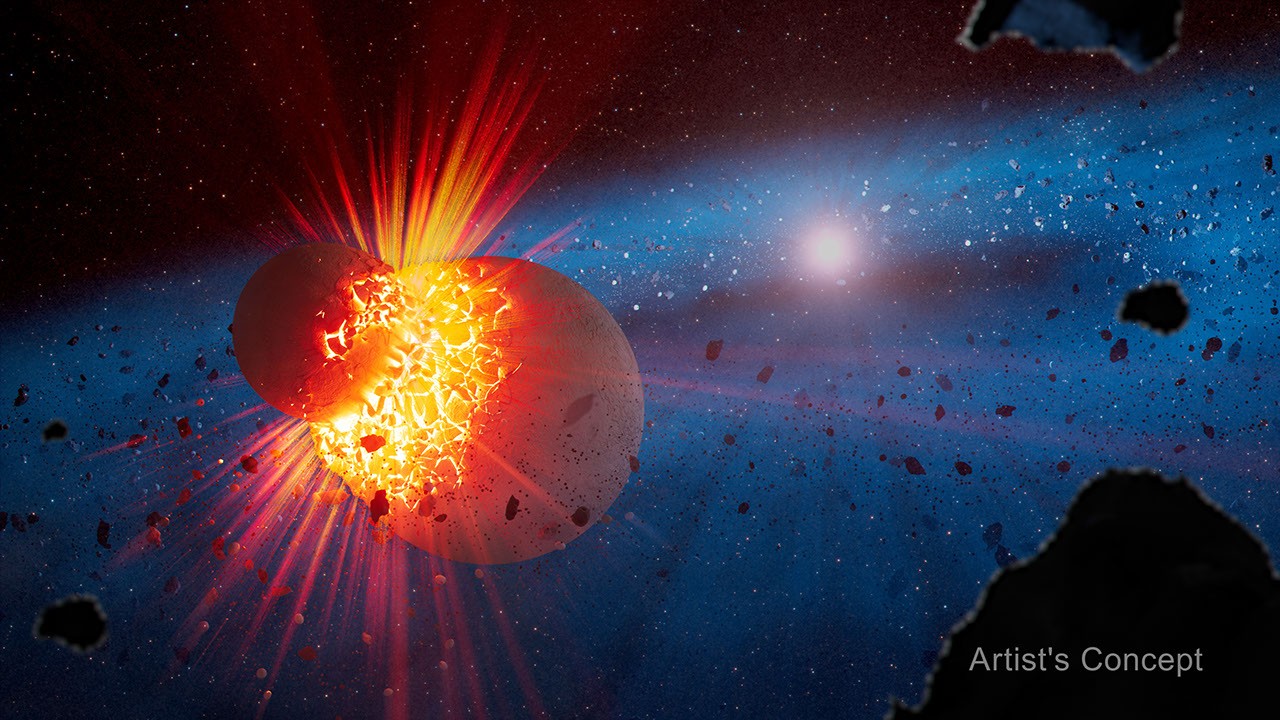
Researchers theorize that a Mars-sized object, known as Theia, collided with the early Earth, leading to the formation of the Moon and significantly altering the planet’s development. The JWST has enabled astronomers to study young stellar systems exhibiting similar upheaval, which could shed light on the energy levels of these cosmic collisions and the resulting chaos.
The team, led by Kate Su from the Space Science Institute in Boulder, Colorado, compiled a sample of 21 extreme debris disks. This included data from the retired Spitzer Space Telescope along with new observations made by Webb. Their work indicated that only about 1% of young stars display the characteristics associated with these disks, making them a rare but valuable focus of study.
Characteristics of Extreme Debris Disks
Extreme debris disks are distinguished by three main properties: smaller dust grains, a high concentration of warm dust, and irregular brightness fluctuations. The research team categorized the disks based on their mineralogical composition into two groups: silica-rich and silica-poor disks. Silica-rich disks are indicative of high-energy impacts, while silica-poor disks result from less energetic collisions.
One-third of the disks in the sample were found to be silica-rich, suggesting they originate from significant impacts between Mars-sized bodies, whereas the remaining two-thirds were silica-poor, resulting from smaller, grazing collisions among Moon-sized objects. The silica-rich disks were associated with stars younger than 300 million years, while the silica-poor disks persisted across a broader age range.
Implications for Our Solar System
The findings may have implications for understanding the formation of terrestrial planets, including Earth. The observed ages of silica-rich extreme debris disks align with the timing of Earth’s formation, suggesting that our planet’s early history may have involved phases of extreme debris disk activity.
Researchers speculate that the Sun may have also experienced a silica-poor extreme disk phase, which could relate to the Late Heavy Bombardment hypothesis, where the orbits of smaller bodies were disrupted by the migration of gas giant planets, leading to catastrophic collisions.
As the research progresses, scientists hope to gather more data on these extreme debris disks to deepen their understanding of planet formation processes.
The James Webb Space Telescope operates as the leading observatory for space science, aiming to unravel mysteries about our solar system and beyond.
Source: NASA