NASA is set to embark on one of its most ambitious missions yet, with the Artemis III program launching in 2027. This mission will involve sending astronauts into low Earth orbit to perform critical tests in preparation for future lunar landings.
Mission Overview
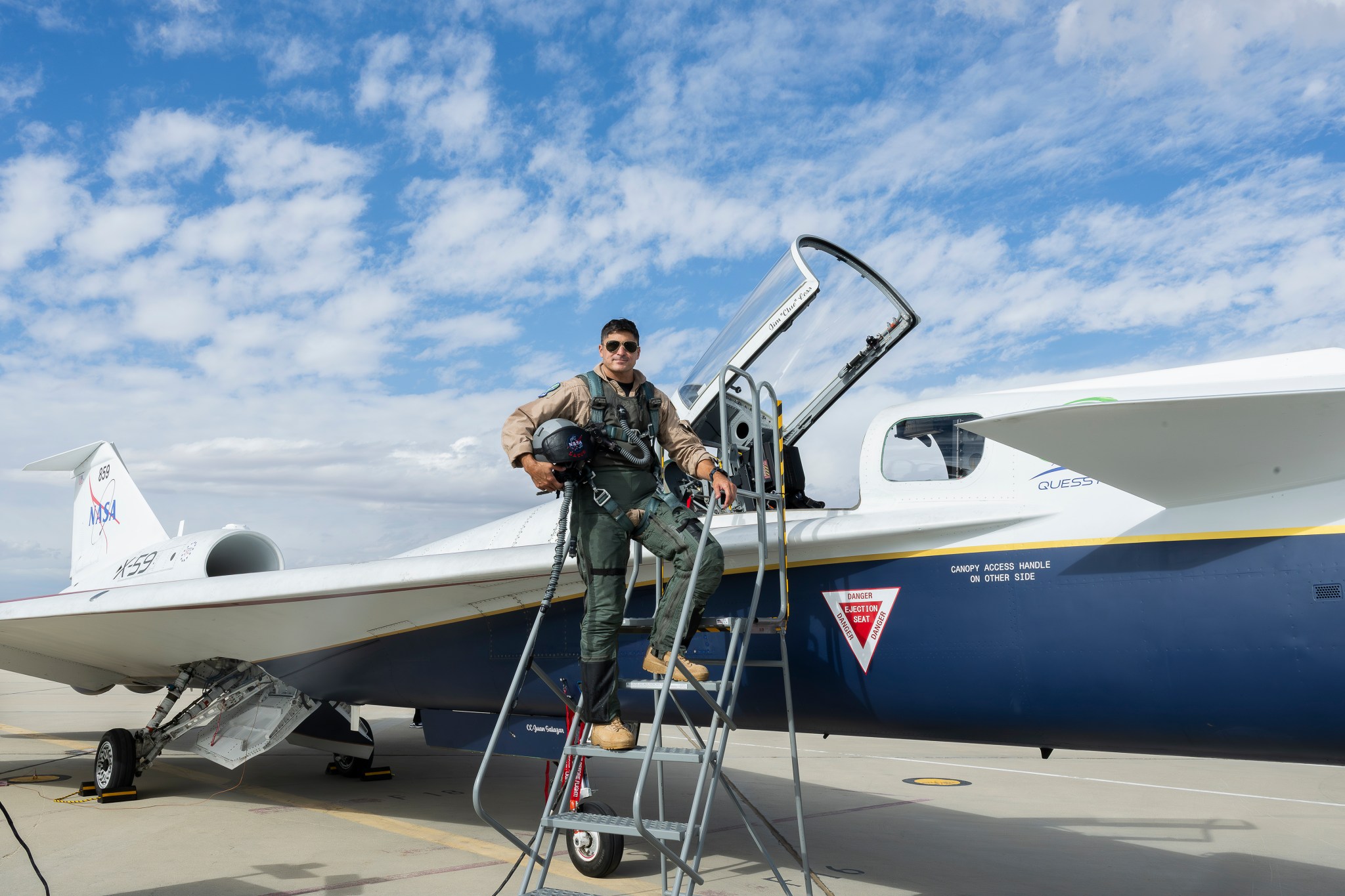
Artemis III will feature NASA astronauts Randy Bresnik, Frank Rubio, Andre Douglas, and European Space Agency astronaut Luca Parmitano aboard the Orion spacecraft. During the planned 14-day mission, the crew will conduct a series of demonstrations with test versions of lunar landing systems developed by Blue Origin and SpaceX. The mission aims to validate hardware and gain operational experience ahead of a planned crewed lunar landing in 2028.
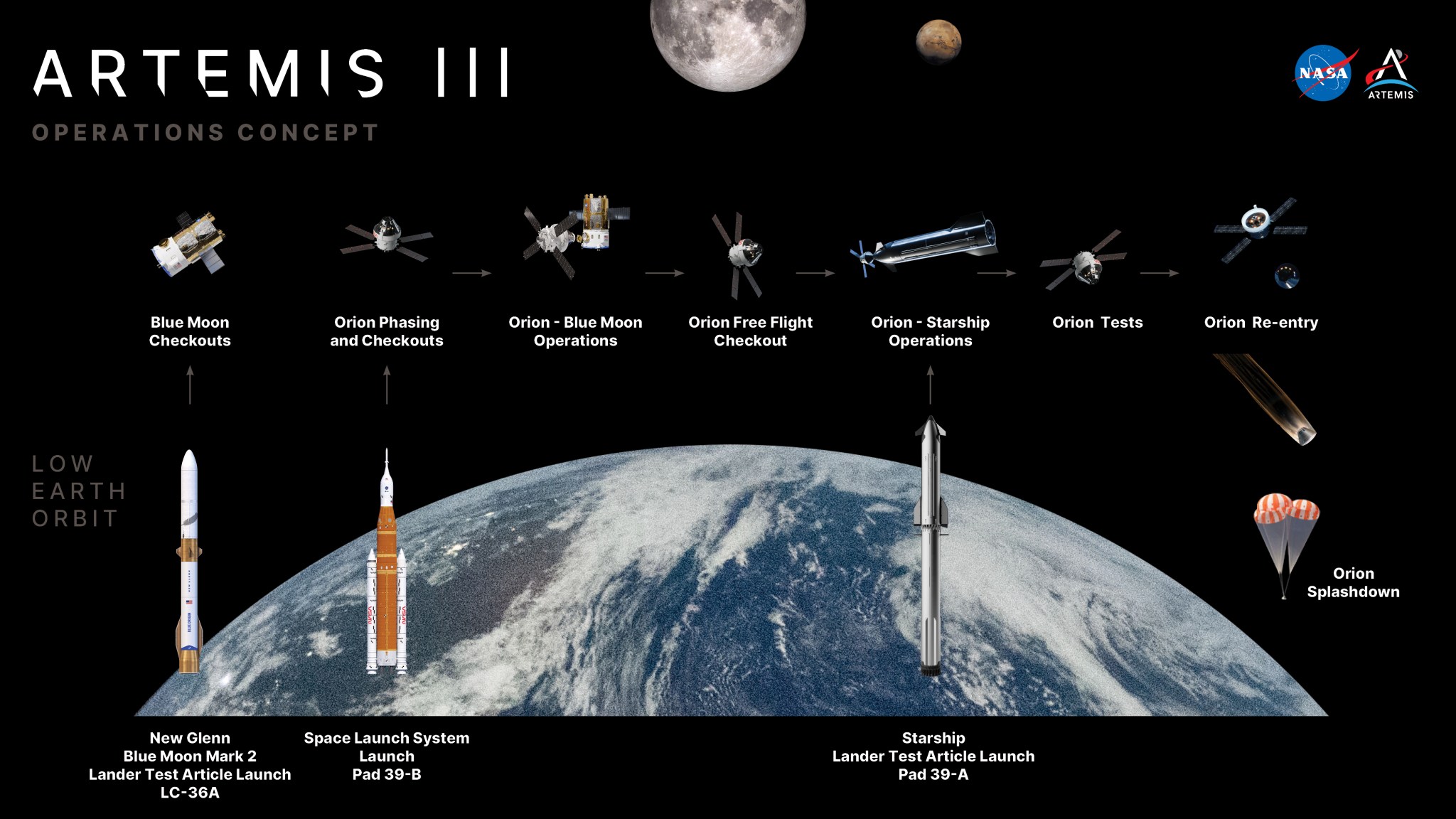
Jeremy Parsons, the Artemis program manager, emphasized the mission’s importance. The mission will involve the launch of three separate spacecraft on three different rockets, a first for NASA.
Testing Blue Origin’s Lunar Lander
The mission will kick off with Blue Origin’s test launch of its Blue Moon Mark 2 lander into a circular low Earth orbit approximately 273 miles above Earth. Following this, NASA plans to launch the Orion spacecraft from Kennedy Space Center in Florida shortly after confirming the Blue Moon test article’s readiness for joint operations.
Once launched, Orion will enter an elliptical Earth orbit before transitioning to a circular orbit for thermal stabilization. The crew will then prepare for their first major objective: a rendezvous and docking with the Blue Moon test vehicle. This operation will allow NASA to evaluate how Orion interacts with a commercial lunar lander in space.
Engaging with SpaceX’s Starship
After the initial operations with Blue Origin’s lander, Orion will undock and reposition for a second rendezvous with a SpaceX Starship Version 3 test article. This launch will occur later in the mission due to Starship’s shorter on-orbit operational lifetime. Orion will dock with Starship for a brief demonstration, focusing on validating the interaction between the two spacecraft.
The docking will involve different geometries, allowing NASA to test various operational concepts during a single mission. This dual docking campaign aims to gather valuable engineering data on how Orion interfaces with two distinct commercial lander designs.
Additional Testing and Experiments
Following the docking activities, Artemis III will continue to gather data that will support future missions. The Orion crew will have up to five additional days in orbit to conduct various tests, including evaluations of crew survival suits, docking sensor tests, and other science and technology demonstrations.
NASA plans to explore health-related assessments for astronauts unable to communicate with mission control and conduct a cellular biology experiment. The mission will also include observations of Earth and the solar environment, as well as the transport of plant seeds for scientific study.
Aiming for Future Lunar Landings
Each activity during Artemis III is designed to reduce risks associated with returning astronauts to the Moon. The mission will give NASA experience in operating alongside commercial partners and managing complex operations with multiple spacecraft.
By the conclusion of Artemis III and its planned splashdown in the Pacific Ocean, NASA expects to have validated technologies and operational concepts essential for future lunar missions. Through this mission, the agency aims to pave the way for an enduring human presence on the Moon and lay the groundwork for the first crewed mission to Mars.
Source: NASA