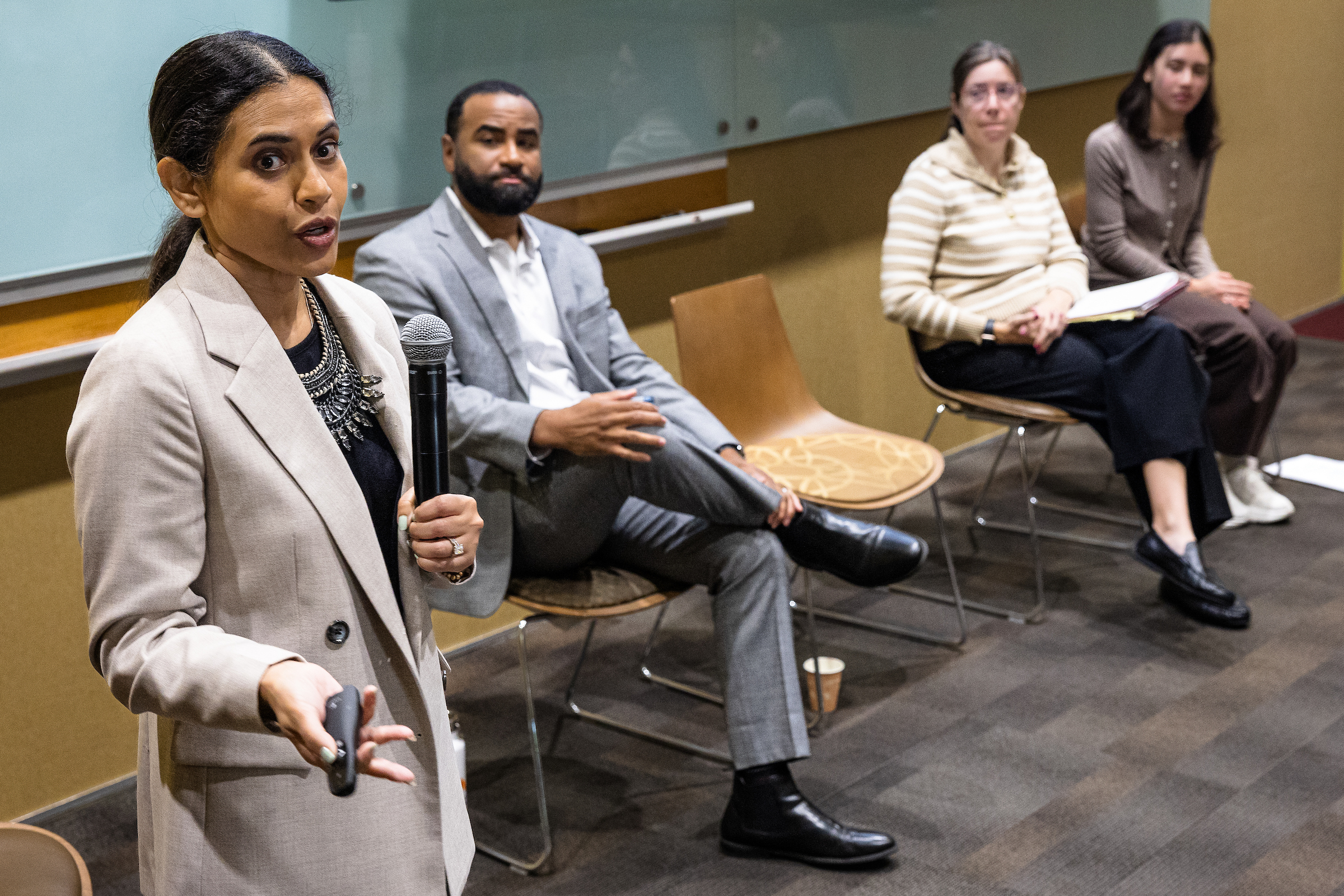
A recent panel discussion at Arizona State University focused on the importance of keeping human connection at the forefront of health care amid rapid technological advancements in the field. The event, titled “Health Care for Humans in the Digital Age,” was part of Humanities Week and featured several ASU experts who explored the intersection of technology and patient care.
Panel Insights on Human-Centered Care
Hannah Lennon, a first-year medical student and president of the ASU Health Humanities Society, emphasized the significance of simple acts like taking a patient’s pulse, which she described as an opportunity to connect with patients.
The panel also included Swapna Reddy, assistant dean in the College of Health Solutions; Annika Mann, co-director of the Health Humanities initiative; and Ian Peebles, an assistant professor in the School of Historical, Philosophical and Religious Studies. They collectively highlighted the challenges and opportunities that technology presents to the traditional patient-care relationship.
The Role of Humanities in Medicine
Cora Fox, an associate professor of English and moderator of the event, noted the importance of addressing the balance between technological innovations and patient-centered care. She pointed out that while advancements such as remote monitoring can enhance access to healthcare, they also pose challenges to the foundational aspects of medical practice.
Reddy raised concerns about the polarized views on health care in the United States, which can obscure the human impact of policies like Medicaid and SNAP. “It’s difficult to humanize these topics,” she stated, urging the audience to consider the lived experiences of those affected by such policies.
Advocating for Character and Virtue
Peebles shared a personal story about his sister’s negative experience with an uncaring doctor, reinforcing the need for virtue in health care. He cited philosopher Edmund Pellegrino, asserting that “ethical analysis cannot substitute for character and virtue.” He believes that fostering virtue can improve patient-physician relationships, reduce physician burnout, and encourage structural reforms within health care.
Emphasizing the need to cultivate these values early, Peebles suggested that medical education must prioritize the teaching of virtue before students face the pressures of clinical practice.
Imagining a Human-Centered Infrastructure
As the discussion concluded, the panelists envisioned a more human-centered health care system. Mann advocated for greater recognition and support for caregivers beyond traditional medical settings, highlighting the importance of financial and social support for those providing care at home.
Reddy suggested that media, such as the HBO Max show “The Pitt,” could illustrate the real-life experiences of health care workers and patients, helping to humanize the complex issues within the health care system.
Source: Arizona State University