Nasa’s Voyager mission, launched in 1977, is approaching a significant milestone as Voyager 1 is set to cross the one-light-day mark on November 18, 2026, reaching a distance of 16.1 billion miles from the Sun. This event comes nearly 49 years after the spacecraft’s launch and highlights the ongoing contributions of the twin Voyager probes to our understanding of the solar system.
Voyager’s Grand Tour
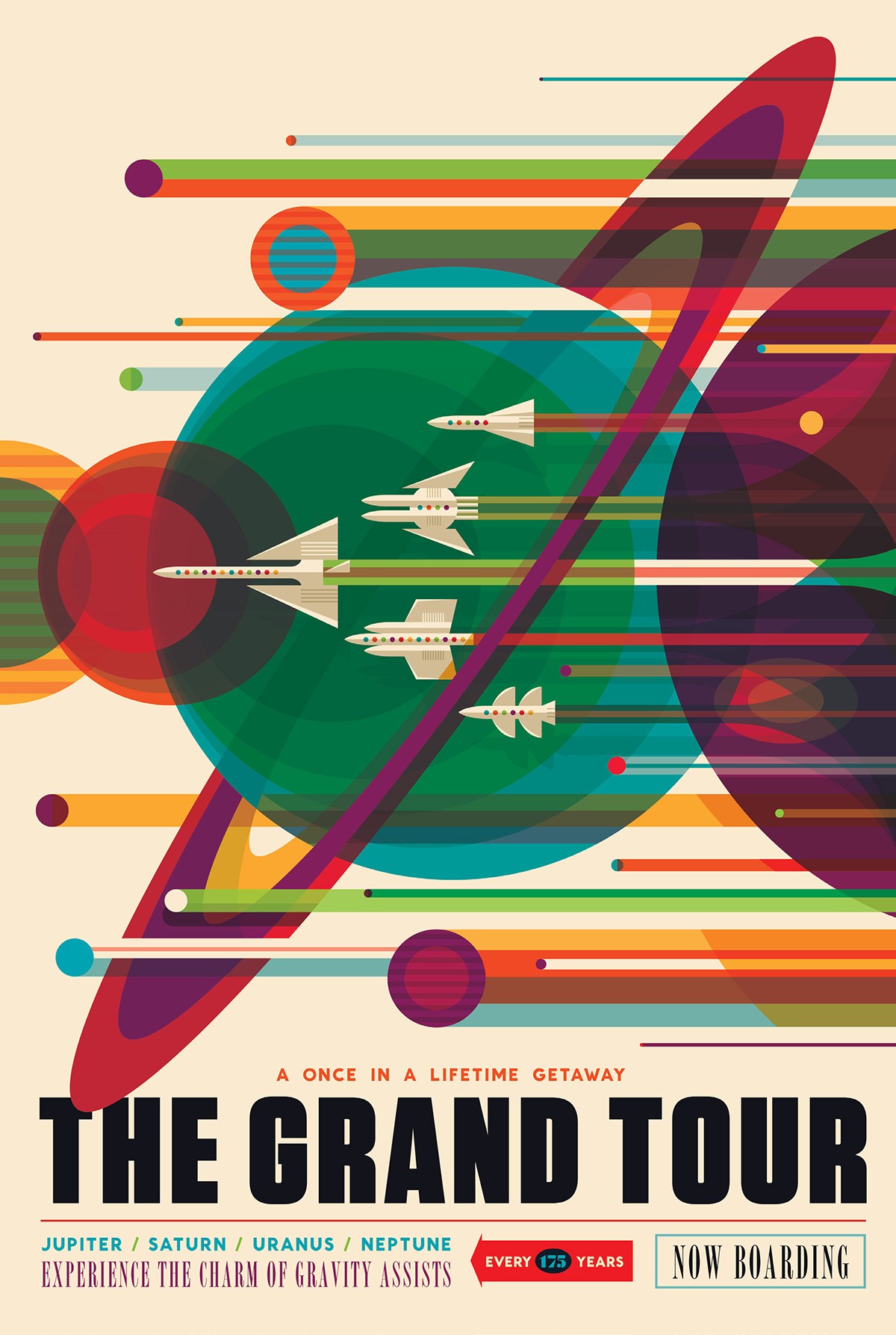
The Voyager spacecraft were designed to take advantage of a rare planetary alignment that occurs once every 175 years. This alignment allowed Voyager 1 and 2 to utilize gravity assists to travel between Jupiter, Saturn, Uranus, and Neptune, providing unprecedented views of these gas and ice giants, as well as their moons. After their encounters, the probes diverged, with Voyager 2 continuing to Uranus and Neptune, while Voyager 1 captured a final image of Earth, famously known as the “pale blue dot.”
The Golden Record
Each Voyager spacecraft is equipped with a Golden Record, a 12-inch phonograph containing greetings in 55 languages, 27 musical tracks, and images depicting life on Earth. The record is safeguarded by an outer cover that features etchings indicating the Sun’s position relative to 14 pulsars, along with instructions for playback. The record’s materials, including copper and gold plating, are designed to withstand the harsh conditions of space, while the cover incorporates uranium-238, which has a half-life of 4.468 billion years.
Journey Beyond the Heliopause
Both Voyager 1 and 2 crossed the heliopause—the boundary between the Sun’s solar wind and the interstellar medium—in 2012 and 2018, respectively. As of now, Voyager 1 is being tracked by NASA’s Deep Space Network, specifically through the Canberra antenna, which currently monitors its position at over 25.80 billion kilometers, or more than 16 billion miles. The spacecraft’s journey illustrates the vast distances within our solar system, with the light-minute serving as a crucial measurement of distance.
Educational Activities
In conjunction with the mission’s milestones, NASA offers educational activities to help the public grasp concepts such as gravity assists and the measurement of light distances. These resources are available to engage and inform audiences about the complexities of space travel and the ongoing legacy of the Voyager missions.
Source: NASA