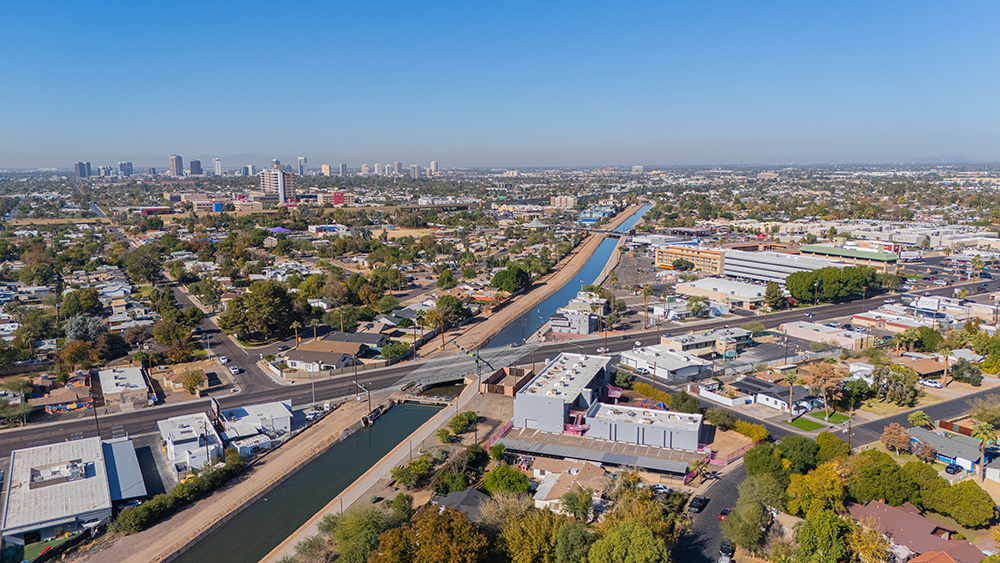
A nearly decade-long collaboration between Northern Arizona University (NAU) and Salt River Project (SRP) focuses on innovative research aimed at protecting Arizona’s natural resources and ensuring that utilities remain safe and affordable. Recent projects include efforts to capture carbon from the atmosphere, monitor wildfire risks, detect water leaks, and support local ecosystems.
Carbon Capture Research
Jennifer Wade, an associate professor of mechanical engineering, is exploring the feasibility of a direct air capture system designed to remove carbon dioxide from the atmosphere while adjusting humidity. Alongside students Randy Brierley, Elijah Woolridge, Justin Patterson, and Branden Welker, Wade has developed a prototype to test this concept. Although significant advancements are still needed for the technology to become practical and cost-effective, the project marks a promising step in carbon reduction efforts.
Wildfire Risk Prediction
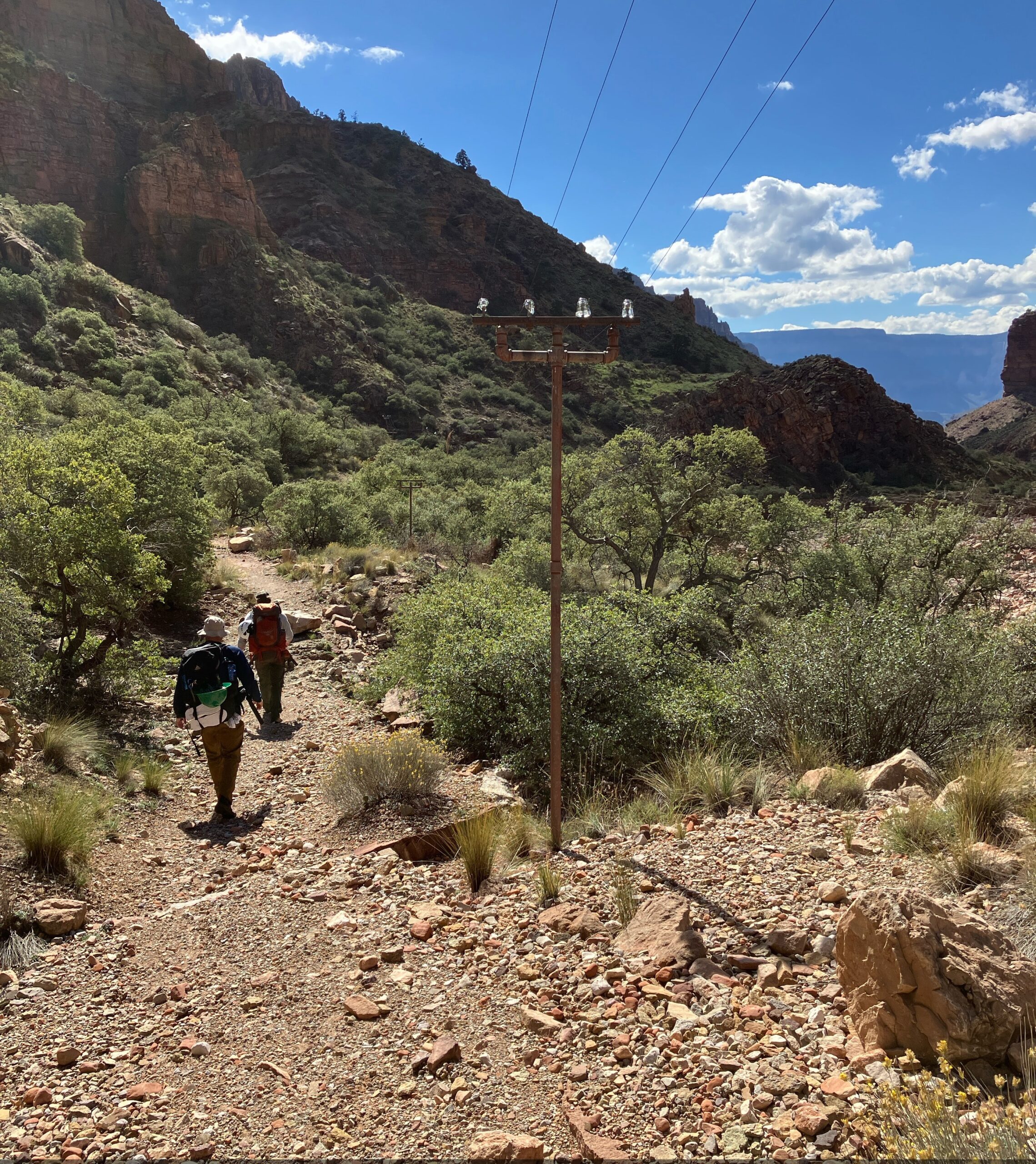
In another research initiative, Salli Dymond, an associate professor in the School of Forestry, is investigating whether soil moisture levels can be used to better predict wildfire risks. She is leading a team that is installing moisture sensors on vegetation and underground in Tonto National Forest. By analyzing the data collected from these sensors, the team aims to enhance wildfire prevention strategies in Arizona.
Leak Detection Innovations
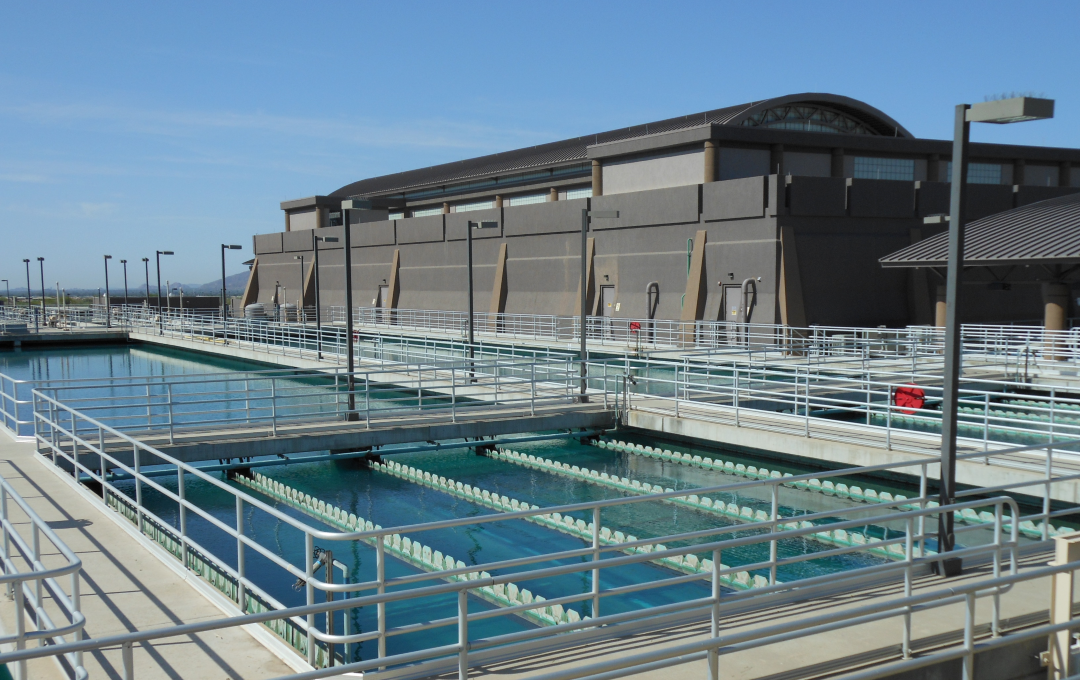
To address water conservation, mechanical engineering professor Michael Shafer is spearheading a project aimed at early leak detection in SRP’s water pipes. Students Ben Krotonsky, Elliott Kinsley, and Logan Bankert have developed a method utilizing manual tools and a Bluetooth probe to sample moisture near the pipes. This approach seeks to detect leaks noninvasively and more efficiently than current methods, with plans to further refine the sampling process.
Research on Northern Mexican Gartersnakes
As part of an ongoing project, a team led by Erika Nowak, an associate research professor in the School of Earth and Sustainability, is conducting surveys for the northern Mexican gartersnake in Tonto Creek. Though no snakes have been found thus far, the study revealed that the necessary ecological conditions for their recovery are present. SRP is working to enhance habitats for this federally threatened species by managing nonnative fish populations.
Canal Inspection Technology
NAU researchers are also developing a method to inspect SRP’s canals for sediment buildup without needing to drain them. Led by Reza Sharif Razavian and Ben Dymond, the project employs sonar scans and a machine learning algorithm for detection. Although the current accuracy of detecting sediment and foreign objects requires improvement, the prototype will be tested during SRP’s upcoming canal maintenance.
Forest Thinning Effects
Finally, Temuulen “Teki” Sankey, a professor in the School of Informatics, Computing, and Cyber Systems, is studying the impact of forest thinning on wildfire prevention. Her team is monitoring areas affected by the 1990 Dude Fire near Payson, using various sensors to collect data on weather conditions, soil moisture, and other environmental factors. This research aims to determine how thinning may mitigate the risk of severe wildfires in dense forest areas.
These projects exemplify the ongoing commitment of NAU and SRP to advance environmental sustainability and resource management in Arizona.
Source: Northern Arizona University