Scientists have reported a significant global rebound in mangrove forests, reversing decades of loss and degradation. Research published in the journal Science highlights the expansion of mangrove ecosystems, particularly in Asia, Australia, and South America, following a recovery that began around 2010.
The study analyzed Landsat imagery from 1984 to 2023, revealing a loss of nearly 3,000 square kilometers (1,200 square miles) of mangroves between 1984 and 2010. However, the researchers found an unexpected increase of nearly 2,000 square kilometers (770 square miles) of mangroves after 2010. This resurgence is characterized by denser canopies, indicating healthier and less degraded forests, especially in South America.
Zhen Zhang, an environmental scientist at Tulane University, noted that the expansion was primarily due to mangroves colonizing new areas, with restoration and regrowth in previously degraded regions accounting for the remainder. He emphasized the significance of this research, stating it represents the first global mangrove maps covering such an extensive period.
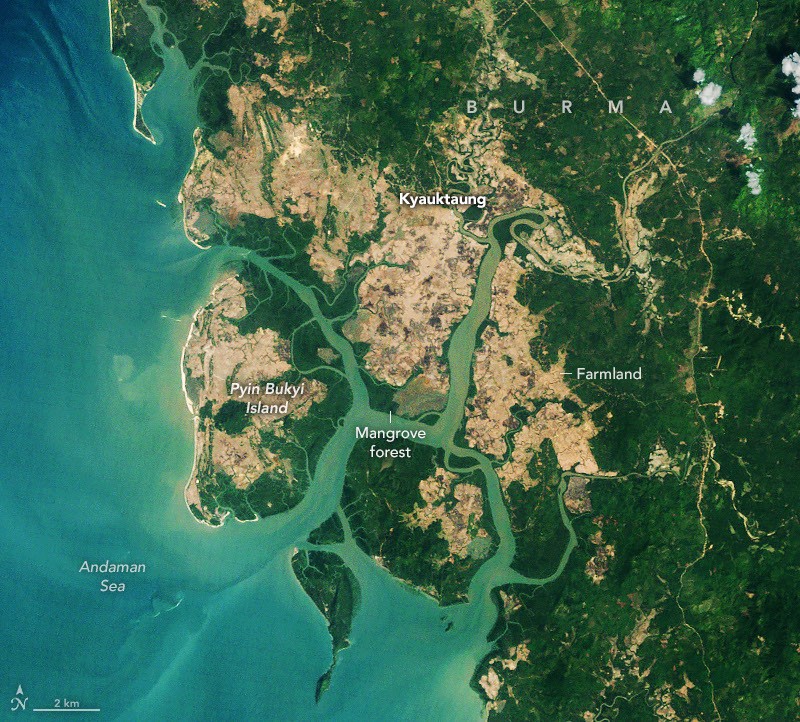
One notable success story is found in Southeast Asia, particularly in Burma (Myanmar), where mangrove loss was rampant in the late 20th century due to agricultural expansion and resource harvesting. The trend shifted around 2010, coinciding with increased awareness and restoration efforts following the Indian Ocean tsunami in 2004. The authors credit improved legal protections and natural sedimentation processes that have allowed mangroves to reclaim abandoned agricultural areas.
Images captured by Landsat illustrate this transition in Burma’s Myeik District, where mangroves have spread into former rice fields. Conservation projects and tree planting initiatives by local communities have further supported this regeneration. Despite these gains, the study notes that Burma still experienced a 28.6 percent loss of mangrove area from the 1980s to 2010, although recent data shows a 10 percent growth since then.
Mangrove trees, which typically grow to about 13 meters (43 feet), are crucial for coastal ecosystems. They store significant amounts of carbon, protect shorelines from erosion and storm surges, and provide vital habitats for marine life. The research also highlighted areas like the Amazon River mouth and northern Australia, where sediment deposition has facilitated mangrove colonization, contributing to increases since the 1990s.
However, the study cautions that some regions continue to face challenges. The Niger Delta has seen substantial mangrove losses, and areas in North America and southern Africa have suffered degradation due to severe weather events. Zhang remarked that while the global recovery of mangroves is promising, it should not lead to complacency, as ongoing conservation efforts remain essential for maintaining these vital ecosystems.
Source: NASA