Arizona State University has once again earned recognition for its interdisciplinary research efforts, ranking fifth among public universities in the United States and 19th globally in the latest Times Higher Education Interdisciplinary Science Rankings, released on November 18. This marks the second consecutive year that ASU has achieved such a high standing.
Commitment to Interdisciplinary Research
ASU’s ranking reflects its commitment to fostering research that transcends conventional academic boundaries. The Times Higher Education rankings evaluate institutions based on their financial investments, support systems, and output in interdisciplinary research. More than 600 universities worldwide were assessed for this recognition.
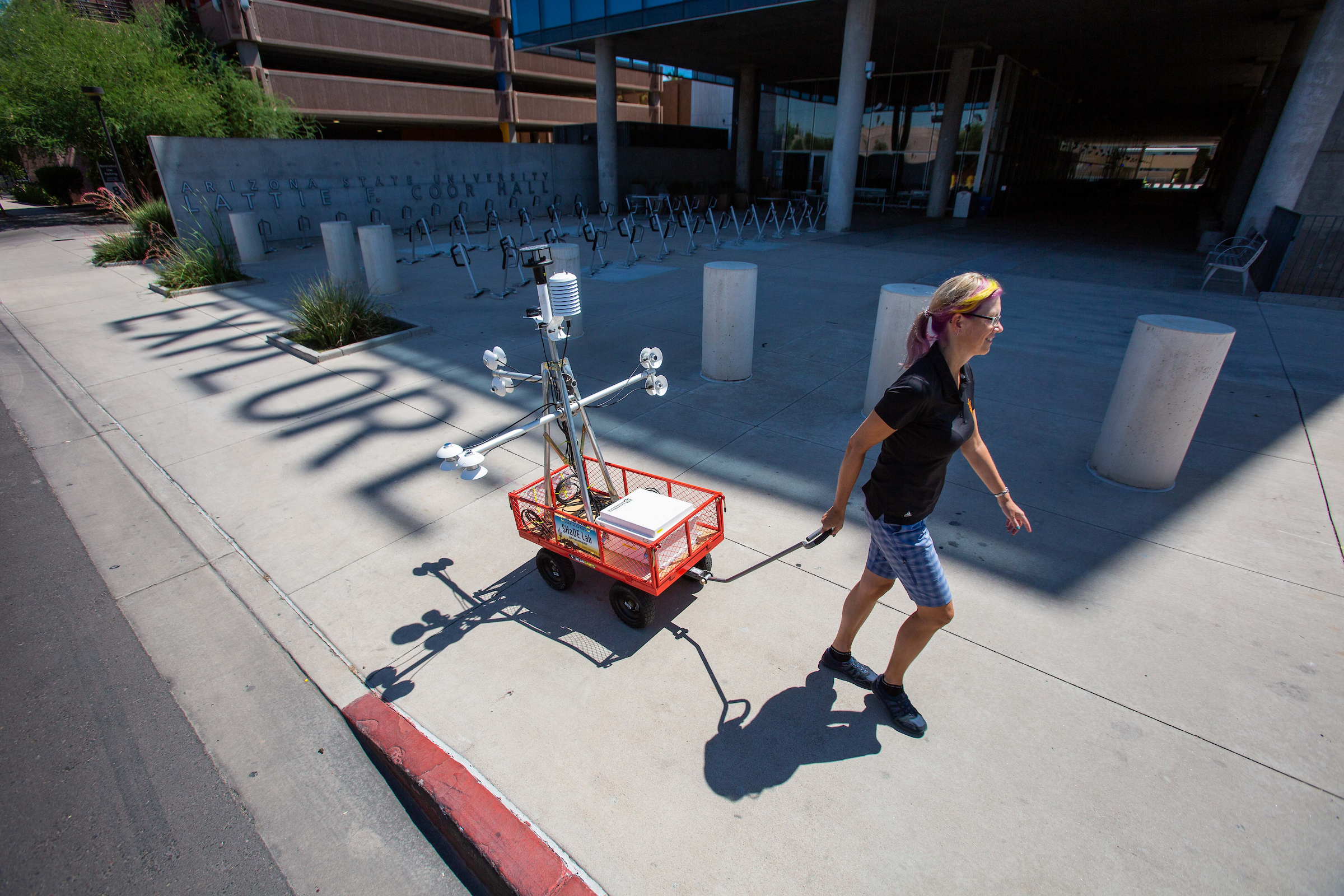
Notable projects at ASU, such as those utilizing thermal manikins and mobile weather carts, illustrate the university’s collaborative approach to tackling complex issues. Researchers work across various fields to address pressing challenges like climate change and public health, emphasizing the need for cooperation between scientific disciplines and areas such as social sciences and law.
Innovative Research Initiatives
One significant example of ASU’s interdisciplinary work is the development of the mobile weather station MaRTy, which is designed to enhance the understanding of how extreme heat impacts human health in urban settings. This initiative is part of a four-year, $2 million project funded by the National Science Foundation and led by researchers across engineering, sustainability, and media studies.
Sally Morton, ASU’s executive vice president for Knowledge Enterprise, noted the necessity of a multifaceted approach to tackle challenges such as Arizona’s water supply. She emphasized that solutions require expertise from various disciplines, including climate science, law, and technology.
Collaboration Across Disciplines
The Center for Human, Artificial Intelligence, and Robot Teaming (CHART) at ASU exemplifies the university’s commitment to interdisciplinary collaboration. Researchers at CHART explore how humans, AI, and robots can effectively work together, drawing on knowledge from technology and teamwork science to create innovative systems applicable in diverse fields, from education to space exploration.
Morton highlighted ASU’s unique structure, which encourages collaboration by eliminating barriers between disciplines. The university has established cross-disciplinary schools and actively supports researchers in pursuing collaborative projects.
ASU’s ongoing commitment to interdisciplinary research aims to position the university as a global leader in this area by 2030, fostering innovative solutions to some of the world’s most challenging problems.
Source: Arizona State University