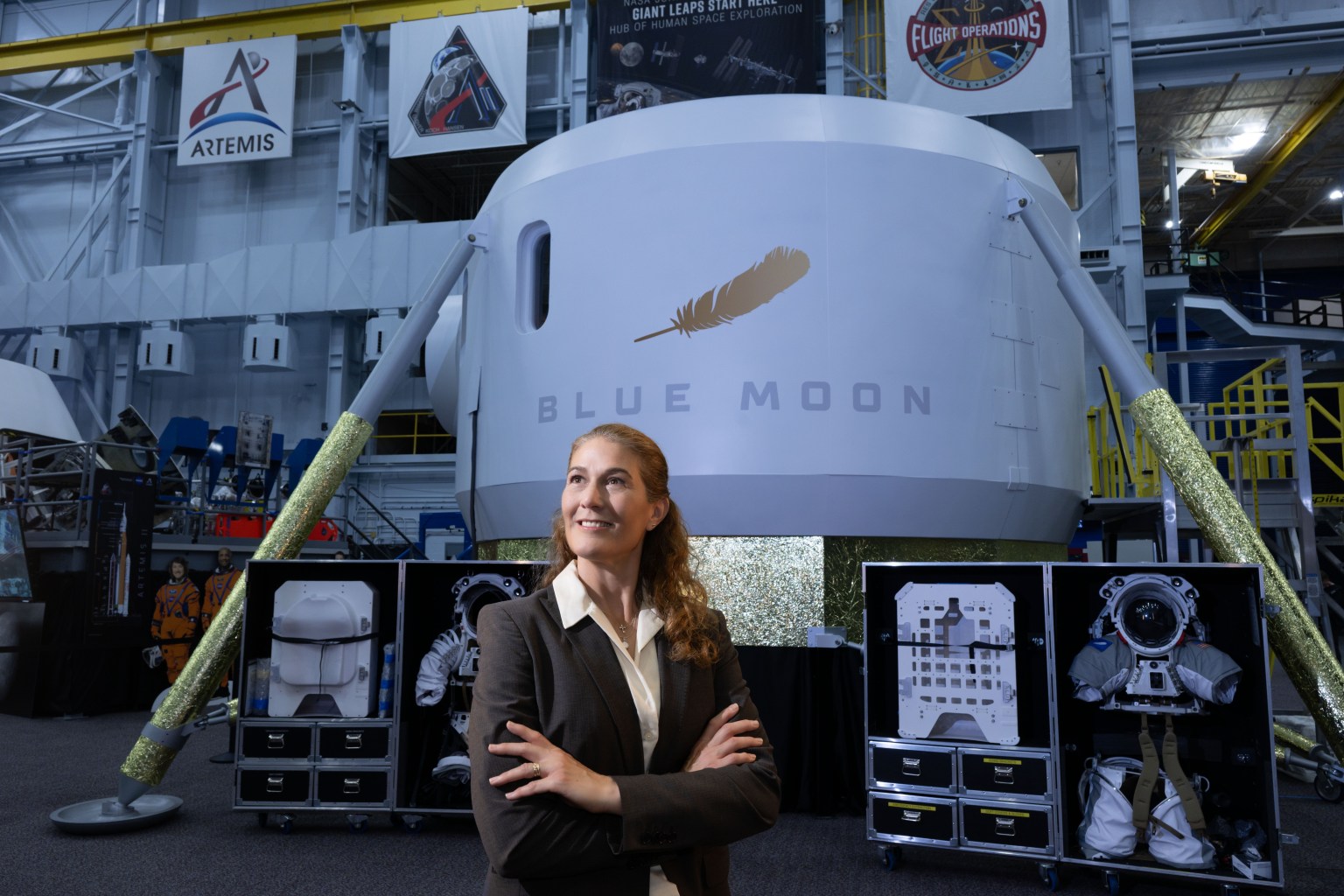
NASA lander integration lead Katie Spicer is making significant contributions to the agency’s Artemis program through her work on Blue Origin’s Blue Moon Mark 2 lunar lander. This lander is one of two commercial systems designed to transport astronauts from lunar orbit to the Moon’s surface and back during crewed missions planned for 2028.
Role and Responsibilities
Based at NASA’s Johnson Space Center in Houston, Spicer is responsible for evaluating and monitoring the design and development of the Blue Moon lander. The project is currently progressing toward creating a streamlined test model for the Artemis III mission, which will involve rendezvous and docking in low Earth orbit, as well as a functional lander for lunar landings.
Spicer collaborates with colleagues at NASA and Blue Origin to ensure the lander’s design aligns with the objectives of the Artemis missions. She focuses on user experience for astronauts, analyzing the functionality of equipment they will interact with during their missions. Her work involves assessing the accessibility of controls and the usability of hygiene systems, among other operational details.
Career Journey
Spicer’s journey to her current role is marked by a notable transition. After earning a degree in microbiology, she took time off to raise her three children before returning to the workforce at NASA. She began her NASA career part-time in the Life Sciences Laboratory, where she performed basic tasks that included maintaining the lab used for Apollo missions.
Her career progressed as she engaged with science payloads on the International Space Station, leading to her role as a flight controller at NASA’s Mission Control Center in 2018. Over five years, she trained extensively to earn certifications as a flight controller and instructor, despite not holding an engineering degree, which is common among her peers.
Looking to the Future
Spicer expresses a deep sense of honor in contributing to the Artemis program, reflecting on the legacy of the Apollo missions and the responsibility NASA carries in the upcoming lunar explorations. She sees the Artemis missions as a chance to build a sustainable human presence on the Moon and lay the groundwork for future crewed missions to Mars.
As NASA embarks on these ambitious lunar missions, it aims to achieve not only scientific discovery but also economic benefits and to inspire future generations of space explorers.
Source: NASA