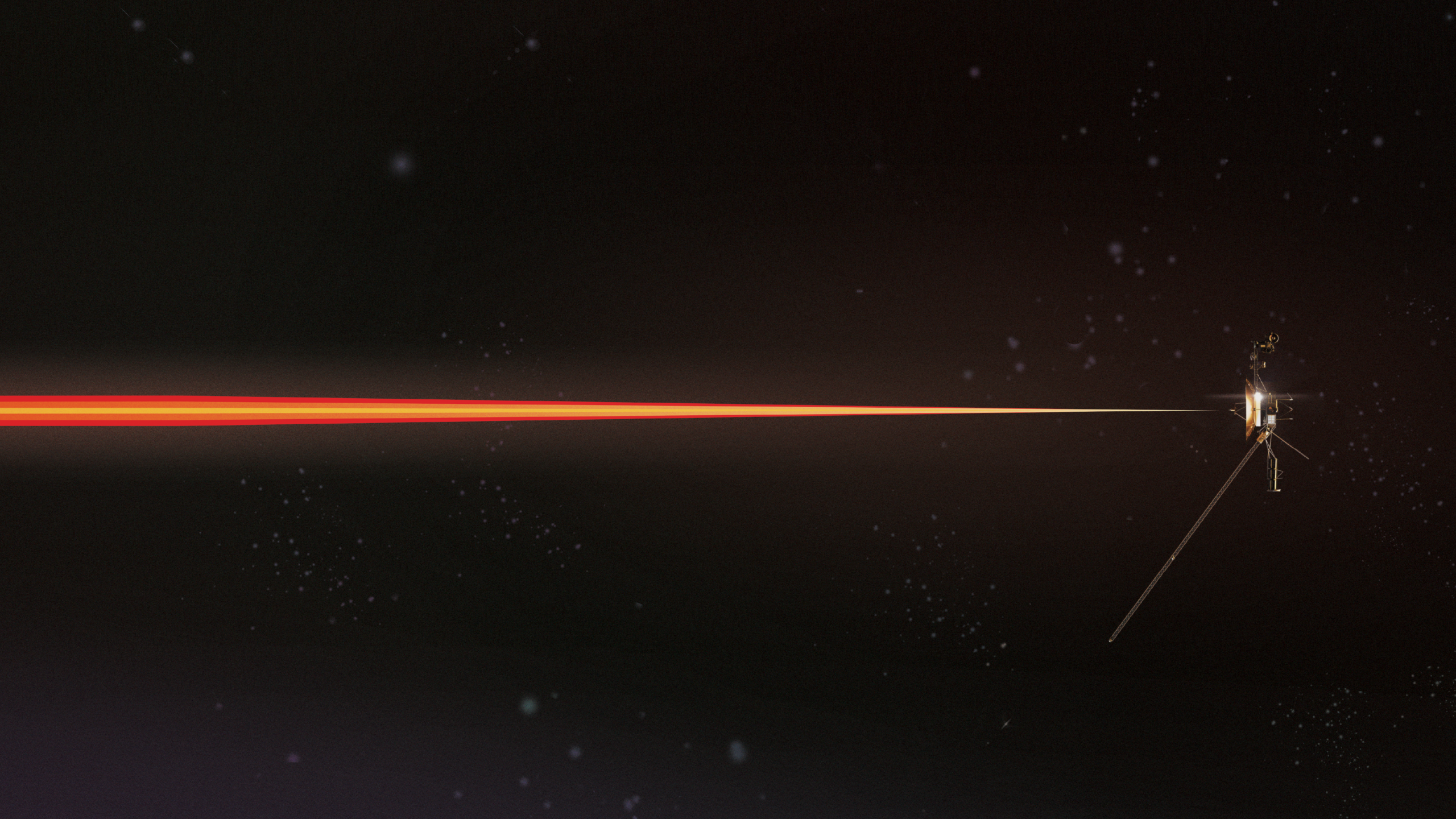
NASA’s Voyager 1 spacecraft has reached a significant milestone, traveling one light-day from Earth after over 49 years of exploration. This achievement occurred at 2:16 a.m. PST on November 18, 2026, marking a distance of approximately 16.1 billion miles (25.9 billion kilometers).
Communication Breakthrough
A signal from Voyager 1 was received by the team at NASA’s Jet Propulsion Laboratory (JPL) 24 hours later, the time it took for the signal traveling at the speed of light to reach Earth. Joe Westlake, director of the Heliophysics Division at NASA Headquarters, remarked on the significance of this achievement, highlighting Voyager’s contributions to planetary science and its role in NASA’s heliophysics missions.
Understanding Vast Distances
Light is used to measure the vast distances of space, traveling at about 186,000 miles (299,000 kilometers) per second. For perspective, sunlight takes roughly 1.3 seconds to reach the Moon and about 20 hours to reach Voyager 1. While the team has not received scientific data from the probe since November 14, they have confirmed the light-day milestone through the carrier signal Voyager is sending back to Earth.
Voyager Mission History
Launched in 1977, Voyager 1 and its twin, Voyager 2, have drastically changed our understanding of the solar system. Voyager 1 was the first human-made object to enter interstellar space in 2012. The probes have provided invaluable data about the outer planets and continue to measure the Sun’s magnetic field from vast distances.
Dave Gallagher, JPL director, emphasized the historic nature of Voyager 1 crossing the light-day threshold, attributing the success to the dedicated teams behind the mission. Ray Jayawardhana, president of Caltech, noted the mission’s enduring legacy and its reflection of humanity’s spirit of exploration.
Technological Challenges and Solutions
Voyager 1 travels at approximately 38,000 mph (61,155 kph) and has faced several challenges due to its age, including hardware issues. Earlier this year, engineers implemented energy-saving measures by shutting off three devices and replacing them with lower-power alternatives. This strategy is anticipated to keep both Voyager probes operational until at least their 50th launch anniversaries next summer.
Communication with the Voyager spacecraft is managed by NASA’s Deep Space Network, which operates large antennas at three global facilities. Project manager Suzanne Dodd highlighted the ongoing communication efforts, noting the increased time required for signals to travel due to the distance.
As Voyager 1 continues its journey, it stands as a testament to human curiosity and the desire to explore the unknown.
Source: NASA