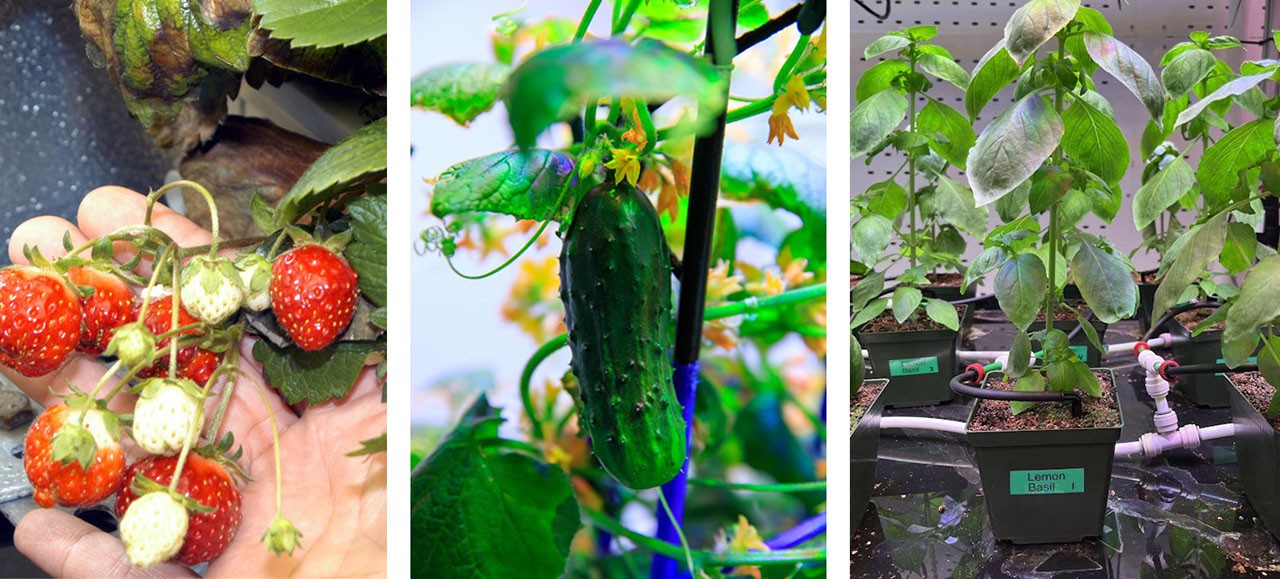
As NASA gears up for upcoming missions to the Moon and Mars, researchers are investigating crops that could provide astronauts with fresh food, nutrition, and variety during their journeys. With Thanksgiving approaching, the importance of diverse food options in deep space is particularly relevant.
Potential Space Crops
Recent studies highlight strawberries, cucumbers, and lemon basil as promising candidates for cultivation in space. These crops have the ability to absorb carbon dioxide, produce oxygen, and recycle water, which will be crucial as missions venture further from Earth.
In addition to research conducted on Earth, NASA is expanding its capabilities aboard the International Space Station. A new prototype growth chamber will be launched to gather vital information for developing crop production systems suitable for future lunar bases and Mars habitats.
Pioneering Strawberry Research
Strawberries are among the few sweet fruits being considered for space missions. They are nutritious, aromatic, and self-pollinating, which makes them an attractive option. At NASA’s Kennedy Space Center in Florida, researchers are growing strawberries in conditions that simulate spaceflight to assess their viability. Collaborators from The Australian Research Council Centre for Excellence in Plants for Space are also involved in expanding the understanding of these space strawberries.
A recent study compared a wild strawberry variety with NASA’s top choice, the ‘Delizz.’ While Delizz produced large, red fruits, the wild strawberry yielded smaller, yellow fruits. Notably, the wild strawberry was more productive in terms of buds and flowers, but Delizz ultimately remained the preferred option due to its more manageable growth habits in a spacecraft.
Cucumbers as a New Frontier
Cucumbers could become the first members of the gourd family to be grown in space. Before they can be consumed by astronauts, extensive testing is required. NASA researchers recently assessed cucumber plants for growth, yield, and nutritional content under simulated space conditions. Their findings indicated that while the plants showed some enlarged leaves, they consistently produced edible fruit.
Incorporating a variety of crops, such as cucumbers, can enhance astronauts’ diets and mental well-being, while also diversifying plant species to improve the chances of successful growth during prolonged missions.
Enhancing Meals with Lemon Basil
Herbs like lemon basil are also being tested to enhance the flavor of meals in space. This citrus-scented herb has successfully passed preliminary testing and seed sanitization, a necessary step before spaceflight to eliminate microorganisms. Future assessments will focus on its growth in specialized plant pillows for use aboard the space station.
Fresh herbs can mitigate menu fatigue, transforming packaged meals into satisfying dishes that support astronaut health and performance.
Advancing Space Research
NASA’s Biological and Physical Sciences Division is at the forefront of these developments, conducting research that utilizes space environments to explore phenomena not possible on Earth. This work not only furthers scientific understanding necessary for extended space travel but also offers benefits for life on Earth.
Source: NASA