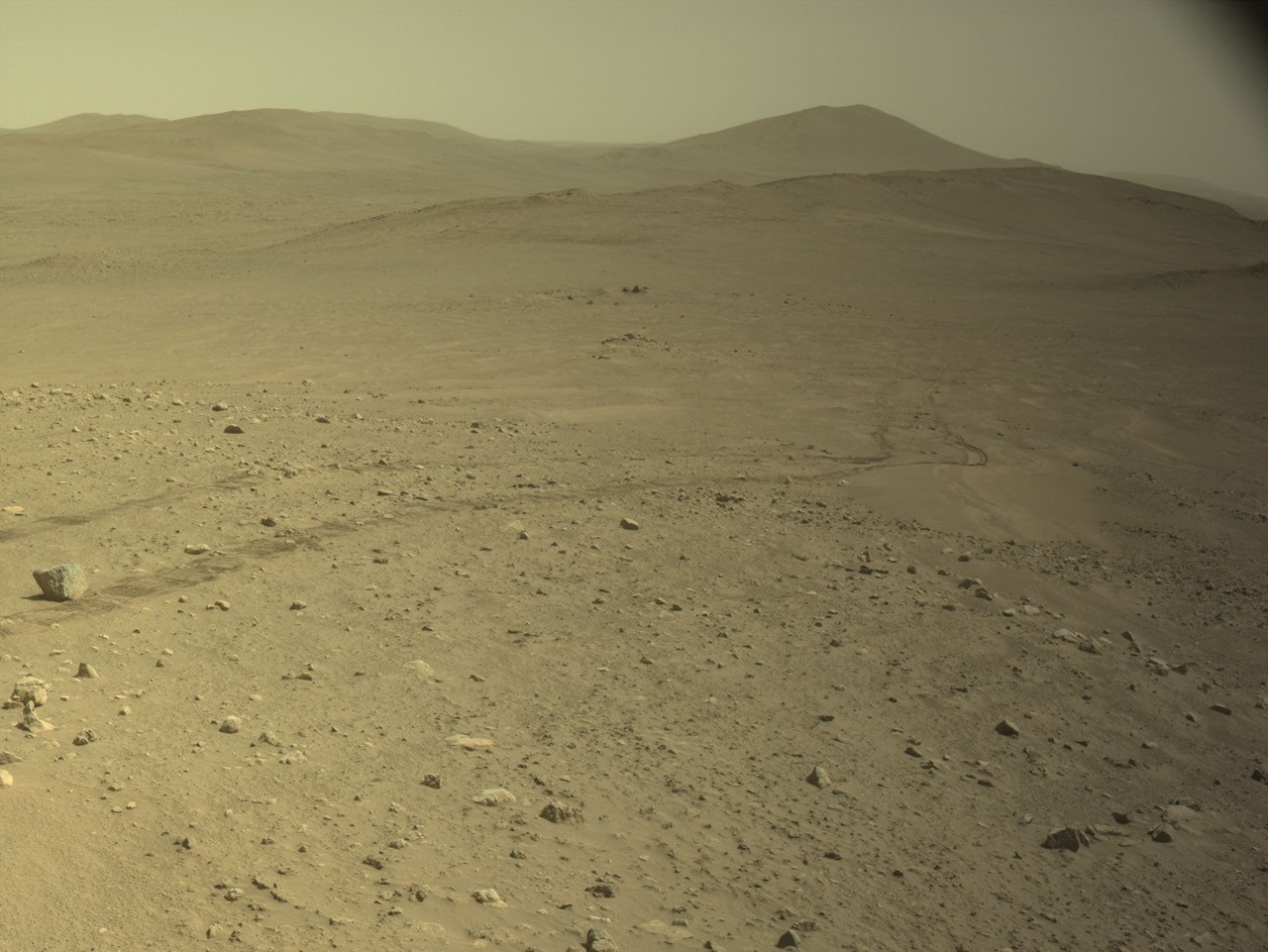
NASA’s Perseverance rover has set a new record for the longest distance driven on another celestial body, reaching 45.22 kilometers (28.10 miles) on October 11, 2026, during Sol 2006 of its mission on Mars. The achievement was recognized with a plaque from Guinness World Records for its engineering counterpart on Earth.
Record-Breaking Journey
Two months prior to the milestone, Perseverance’s odometer was just 200 meters shy of the record. The rover spent time in a scientifically rich area, conducting short drives to perform rock abrasions and proximity science on ancient rock formations before finally moving on. Once ready to advance, Perseverance exceeded the record distance.
Engineering Innovations
Throughout its journey, Perseverance has navigated challenging Martian terrain, which has led to updates in its driving capabilities. The team re-evaluated driving protocols in response to encounters with dense boulder fields and steep slopes. After extensive simulations, the rover’s tilt limit was increased to 24 degrees, and the clearance requirement beneath its belly pan was reduced to 20 centimeters (approximately 7.9 inches). Enhancements to its braking software and steer motor current limits have also been implemented to mitigate rock hazards.
Advanced Autonomous Navigation
A significant advancement is the onboard Global Localization capability, which allows the rover to autonomously determine its position using ground and orbital imagery. This innovation, utilizing a high-speed processor from the Ingenuity Helicopter Base Station, enables Perseverance to drive longer distances without direct human control. The team has also developed software solutions to protect this functionality against the radiation environment on Mars, which can disrupt memory processes.
Future Exploration Plans
As Perseverance continues to ascend the crater rim, the team is leveraging insights gained from its extensive driving experience to enhance its exploration strategies. They are investigating the use of generative artificial intelligence to improve the rover’s autonomous navigation capabilities along complex routes, indicating that the next phase of Mars exploration may be poised for significant advancements.
Source: NASA