NASA’s Neil Gehrels Swift Observatory has concluded its science mission as the spacecraft’s orbit has decreased to less than 171 miles (275 kilometers) above Earth, where increased atmospheric drag hampers its ability to observe astronomical phenomena. The final observation took place on Oct. 20, and the spacecraft is projected to re-enter the atmosphere in the coming weeks.
Legacy of Discoveries
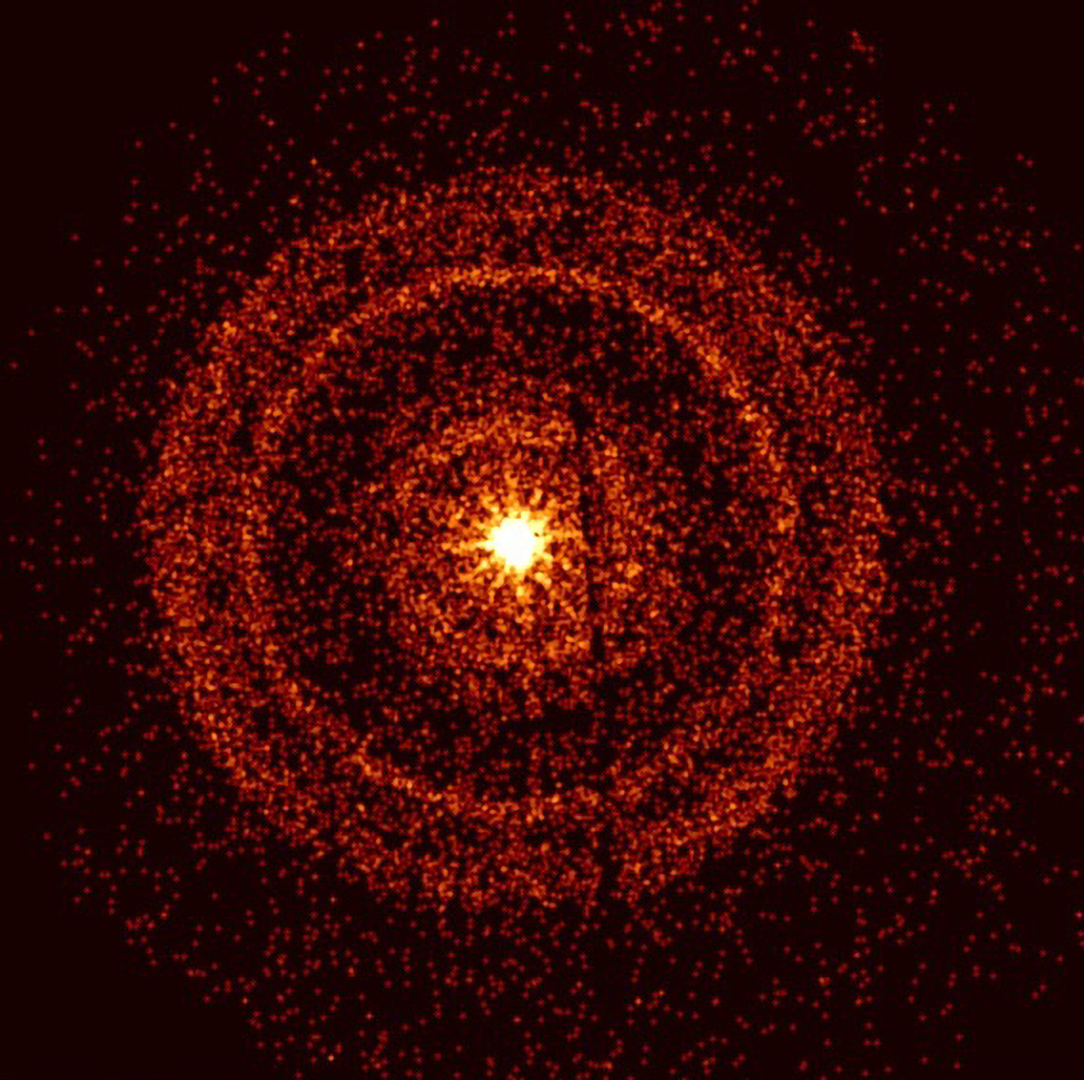
During its operational lifetime, which significantly exceeded its initial two-year mission, Swift has made substantial contributions to astrophysics. According to NASA officials, the observatory has observed over 2,000 gamma-ray bursts, studied more than 1,400 supernovae, and monitored various cosmic events including the destruction of stars by black holes and activity in distant galaxies. The data collected has been foundational to approximately 7,000 scientific papers published in the field.
Shawn Domagal-Goldman, director of the Astrophysics Division at NASA Headquarters, noted Swift’s impressive return on investment and its role in enhancing the understanding of the universe. He emphasized the importance of rapid-response observations and indicated plans to utilize existing telescopes to continue this critical work in the future.
Innovative Technology and Rapid Response
Swift was specifically engineered to rapidly detect and locate gamma-ray bursts, which occur suddenly and are challenging to study with traditional telescopes. S. Bradley Cenko, the mission’s principal investigator, explained that Swift could communicate burst locations to other observatories and refocus its telescopes in about a minute, enabling timely observations before the bursts faded.
The observatory’s unique design allowed it to serve as a versatile tool for astronomical research. Its flexible planning system enabled astronomers to request observations of cosmic events with minimal notice, accommodating up to 75 independent targets each day.
A Rich Archive for Future Research
The Swift archive comprises nearly 22 years of data, including brightness measurements, multiwavelength spectra, and over 1.5 million images from its Ultraviolet/Optical Telescope, totaling approximately 12 terabytes of information. This extensive dataset, part of NASA’s commitment to open science, will remain accessible for future research and discoveries.
In light of Swift’s mission conclusion, NASA is actively seeking new methods to maintain rapid responses to cosmic events, ensuring that the scientific community continues to benefit from timely observations in the field of astrophysics.
Source: NASA