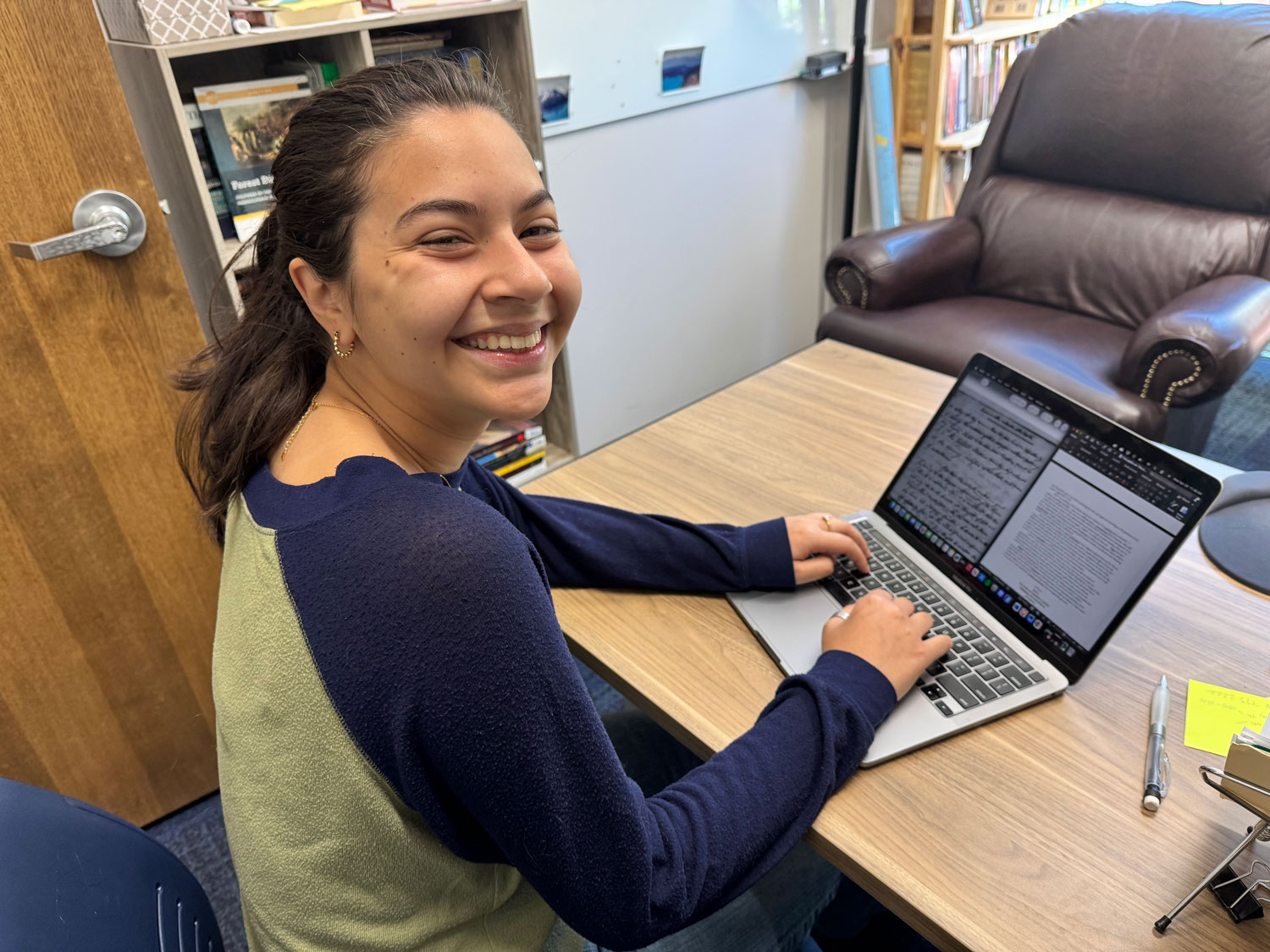
Daniella Ferrero, a history major at Northern Arizona University, has recently completed a significant project involving the transcription of over 100 pages of writings by John Shipman, an English Methodist missionary in early 19th-century Jamaica. This work was part of the Honors Undergraduate Fellowship program, which supports paid research opportunities for students.
Ferrero collaborated with assistant teaching professor Kyle Welty, who has been working on transcribing Shipman’s writings for nearly two decades. Welty noted that the fellowship program has revitalized his research efforts.
Understanding Historical Context
The writings Ferrero transcribed provide insight into a complex historical period where slavery was central to Jamaican society, with enslaved individuals comprising nearly 90% of the population. Welty explained that missionaries like Shipman existed in a unique position; while they aimed to convert enslaved people to the Methodist faith, they also had to navigate the concerns of plantation owners who feared that education and religious teachings could inspire thoughts of liberation.
Shipman’s letters reveal his struggle to balance the religious mission with the realities of a slave-dominated culture. Ferrero highlighted Shipman’s efforts to reassure planters that he did not intend to threaten their way of life, even making remarks that reflected the racial hierarchies of his time.
Contradictions in Historical Narratives
Despite his reassurances, Shipman’s writings also contained contradictions that suggest a more complex view on slavery. Ferrero discovered passages that hinted at an abolitionist perspective, including one where Shipman suggested that enslaved people should leave if they were being forced to act against biblical teachings. However, he ultimately chose to cross out this sentiment, understanding the potential repercussions it could have on his work.
Throughout the transcription process, Ferrero noted several instances of contradictory language in Shipman’s writings. He acknowledged the potential for enslaved individuals to achieve more if given opportunities, yet still employed racial stereotypes prevalent at the time. This complexity in historical figures illustrates the multifaceted nature of human intentions and actions.
Lessons from the Past
Welty emphasized that understanding historical figures requires recognizing their complexities. He noted that while missionaries are often viewed as agents of colonialism, their motives were varied and sometimes conflicted with the interests of the plantation class. This nuanced perspective on history can inform contemporary views on social issues.
As Ferrero prepares for a future in research focused on Latin American colonial history, her experience with Shipman’s writings has deepened her appreciation for the importance of archival work.
Source: Northern Arizona University