Researchers at Arizona State University have achieved a significant milestone in X-ray science by capturing the motion of molecules in real time through their compact X-ray facility, ASU X-Beams. This advancement allows for the creation of “molecular movies,” which could have far-reaching implications in various fields, including biomedicine, semiconductor technology, and renewable energy.
Breakthrough in X-ray Pulses
ASU scientists have successfully produced the fastest X-ray beams ever generated by a compact instrument, completing a series of commissioning experiments that pave the way for time-resolved studies of quantum dynamics. This achievement was made possible through support from the National Science Foundation and private philanthropy, marking the facility’s readiness to serve the global scientific community.
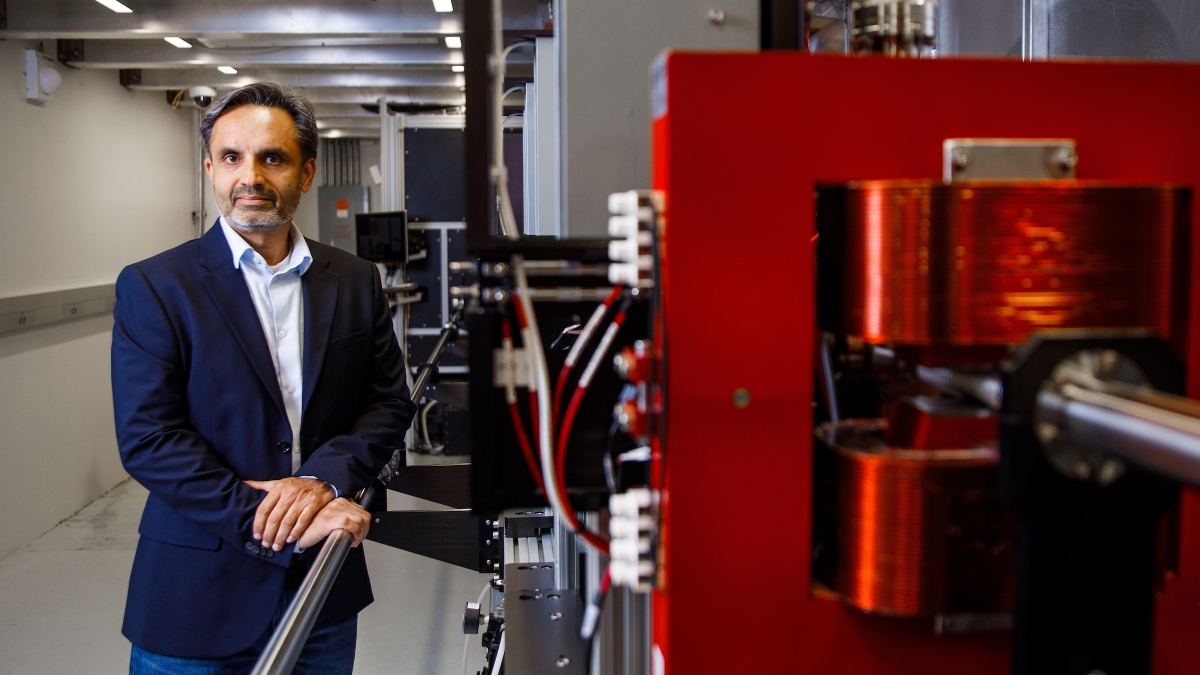
Arvinder Sandhu, director of ASU’s CXFEL lab, emphasized the goal of establishing a world-class X-ray facility that will enhance research in protein studies and quantum processes. The recent results demonstrate the facility’s capabilities and readiness for research initiatives.
Capturing Molecular Dynamics
To study molecular motion, researchers utilized ultrafast X-ray pulses that can capture actions occurring at the femtosecond level, equating one femtosecond to 15 millionths of a second. The experiment involved 1T-tantalum disulfide (TaS2), a quantum material known for its complex electronic properties. By heating TaS2 with a near-infrared laser pulse, researchers excited the atoms, allowing them to observe the material’s transformation into a charge density wave.
The precise timing of the X-ray beam and laser pulse—both reaching the sample within a nanosecond—was crucial for capturing these dynamic changes. Samuel Teitelbaum, an ASU assistant professor, noted that the X-ray measurements tracked the evolution of the incommensurate phase of TaS2, which is essential for understanding how materials respond to heat stress.
A Unique Research Facility
The ASU X-Beams facility aims to become a premier destination for scientific research, with plans to house two instruments dedicated to groundbreaking discoveries. A second, more advanced instrument is currently under construction and is expected to be operational by 2028. Sandhu emphasized the vision of creating an ultra-fast X-ray pulse facility at a university, a feat not previously accomplished.
This research initiative involves a collaborative effort among approximately 80 researchers, including experts in lasers, computer science, engineering, and biology, all working together to optimize the capabilities of the CXFEL facility.
Looking ahead, the team plans to explore time-resolved dynamics in protein crystals, which could play a crucial role in understanding human diseases and advancing renewable energy applications.
Source: Arizona State University