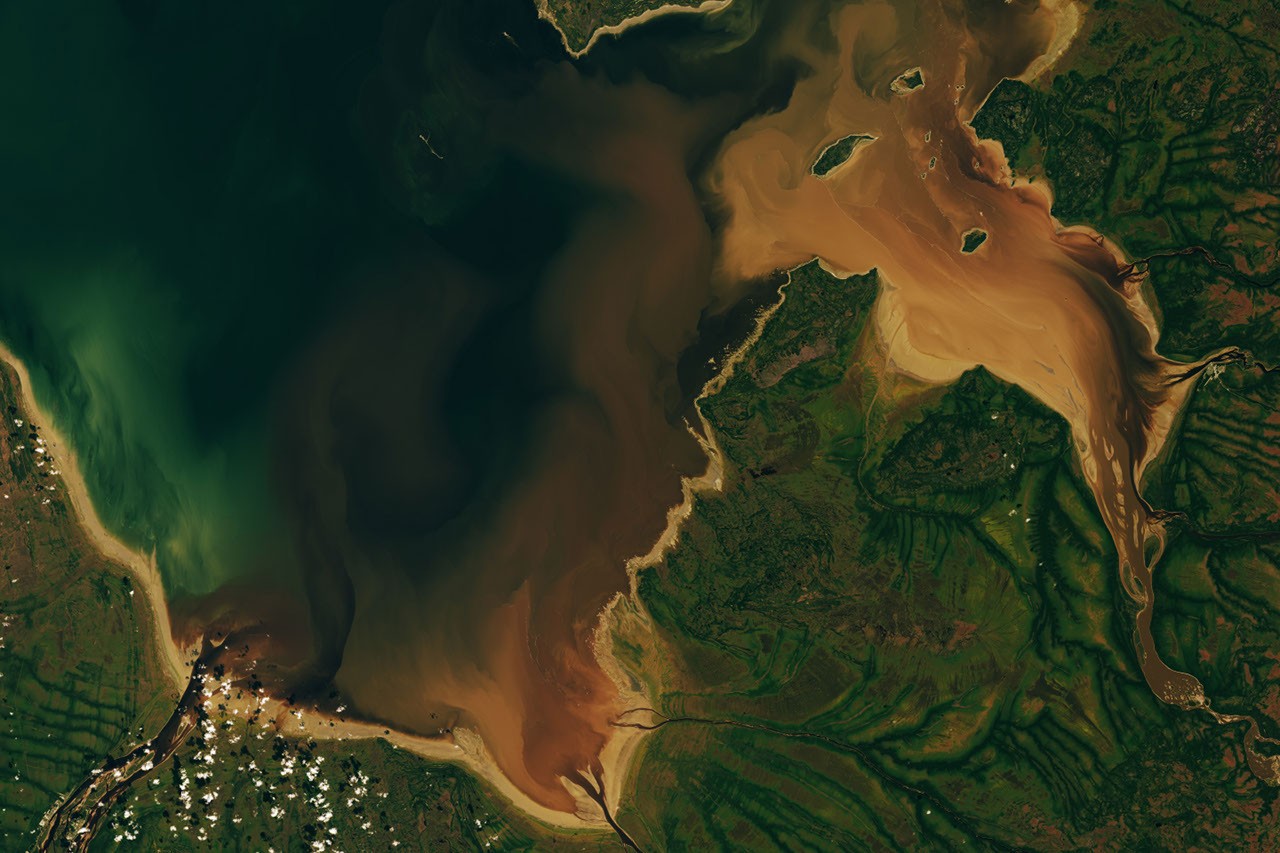
The distinct brown waters flowing into Hannah Bay and Rupert Bay in Canada have been captured in a recent image by NASA’s Landsat 9 satellite. The hue, described in the Cree language as “pahtaaunaakun,” meaning “color of singed beaver,” is a result of organic matter staining the water from surrounding boreal forests and wetlands.
Environmental Factors
The rivers and streams that feed into these bays often carry colored dissolved organic matter (CDOM), which absorbs light in the blue and ultraviolet spectrum, giving the water its brown appearance. This organic material, derived from decaying vegetation, leaches into the waterways, similar to how tannins stain tea. The image, taken on September 27, 2026, shows the Moose, Nottaway, and Harricanaw rivers discharging their tea-colored water into the broad mudflats of the bays, blending with the darker blue waters of James Bay.
The mudflats themselves are formed by the area’s shallow bathymetry and the continuous deposition of fine sediment from rivers. Tidal movements and river currents frequently disturb this sediment, creating lighter brown plumes visible in the water. The varying moisture levels and vegetation types along the shoreline contribute to the distinct green patterns seen in the landscape, with denser forests appearing darker and peat bogs lighter.
Cultural Significance
Beavers have a significant place in the cultural and historical narrative of the region. The Cree people, who have inhabited the area for millennia, have traditionally hunted beavers for their meat and pelts. The arrival of European traders in the 1660s initiated a fur trade that heavily focused on beaver pelts, leading to the establishment of trading posts, including those associated with the Hudson’s Bay Company.
In addition to their economic importance, beavers are woven into local myths. One such story tells of a giant chasing a mythical beaver into Rupert Bay, resulting in the creation of Stag Rock after the giant missed the beaver with a thrown stone. Historically, the Hudson’s Bay Company collaborated with the Cree in the 19th century to establish a managed beaver preserve on Charlton Island, aiming to boost beaver populations for trapping.
This recent imagery from NASA not only highlights the ecological features of the region but also underscores the intertwined relationship between the land, its natural resources, and the cultural heritage of the Cree people.
Source: NASA