A significant El Niño event, described as potentially the strongest since 1950, is currently being monitored by NASA. The phenomenon, which occurs every two to seven years, is characterized by warmer-than-normal water temperatures in the equatorial Pacific.
Monitoring El Niño’s Development
The National Oceanic and Atmospheric Administration (NOAA) reports an 83% likelihood that this El Niño will have a major impact globally, affecting farmers, firefighters, and coastal communities in various ways. NASA scientists are utilizing satellite data to observe changes in ocean conditions, including shifts in trade winds, ocean heat distribution, and altered rainfall patterns.
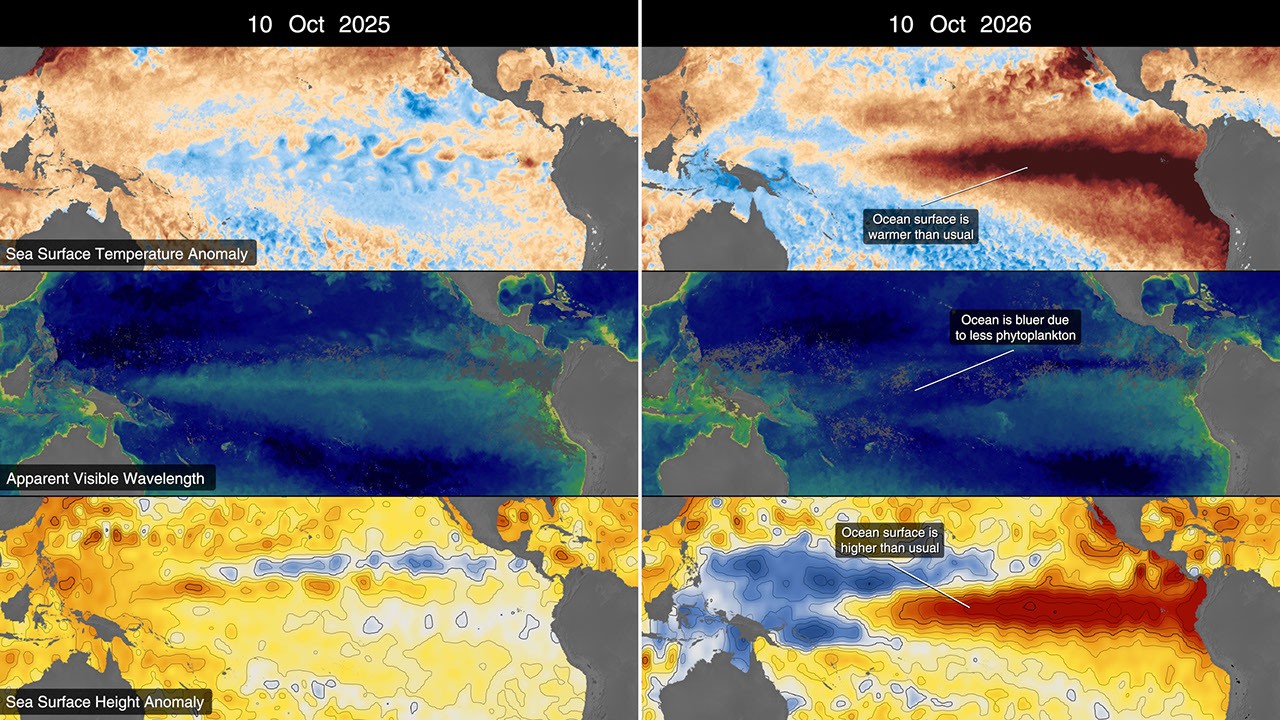
One of the early indicators of this El Niño was detected in January 2026, when a Kelvin wave—a slow-moving pulse of warm water—was observed near Micronesia. These waves transport heat across the Pacific, influencing air pressure and sea levels. By April, the wave had reached the eastern Pacific, leading to observed increases in sea surface temperatures and local sea levels.
Sea Surface Height and Temperature Changes
The Sentinel-6 satellites, which measure ocean height with high precision, have shown that sea levels in the eastern Pacific have risen significantly, while some areas around Indonesia and northern Australia are experiencing lower-than-normal sea levels. Current sea surface temperatures in the eastern Pacific are reported to be approximately 3 degrees Fahrenheit warmer than the long-term average, with potential for further increases.
Nasa’s satellite systems, equipped with advanced sensors, are tracking these temperature changes and their implications on global weather patterns. The data indicates that the warm water influences atmospheric conditions, potentially leading to altered precipitation patterns worldwide.
Impact on Ocean Color and Marine Life
Additionally, the warming waters are affecting the color of the ocean. Observations from NASA’s PACE satellite indicate a shift in ocean color, particularly a decline in phytoplankton abundance due to reduced nutrient supply. Phytoplankton thrive in cooler, nutrient-rich waters, and their decline could disrupt the marine food web.
This year’s El Niño marks the first significant event since the PACE satellite’s launch in 2024. The satellite’s Ocean Color Instrument is providing vital data on ocean color changes, helping researchers monitor the health of marine ecosystems in near real-time.
NASA scientists emphasize the importance of tracking El Niño, as it has widespread effects on global weather, ecosystems, and communities. The ongoing observations aim to enhance understanding of this complex climate phenomenon.
Source: NASA