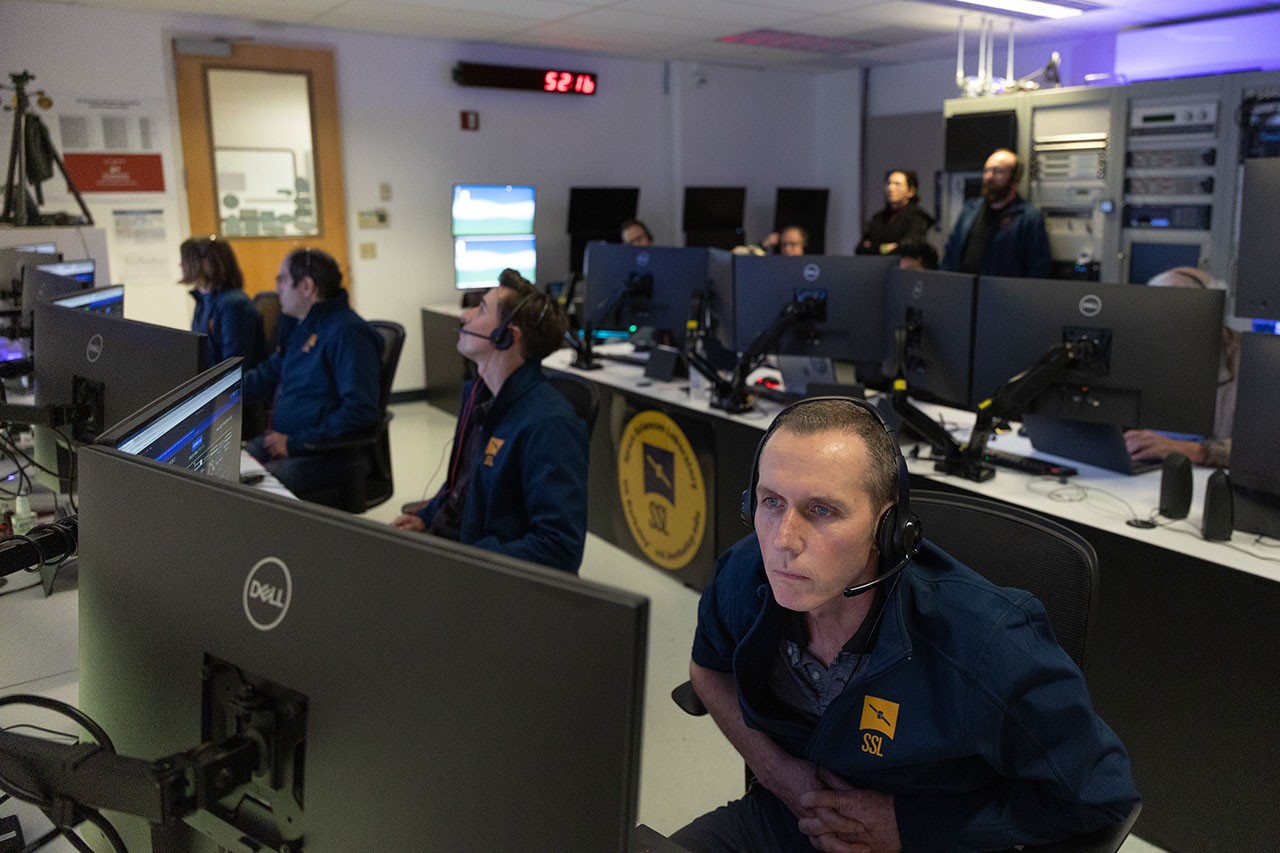
NASA’s ESCAPADE (Escape and Plasma Acceleration and Dynamics Explorers) spacecraft have successfully completed powered flybys of Earth, using the planet’s gravity to assist their trajectory toward Mars. The twin spacecraft are set to arrive at the Red Planet in September 2027.
Pioneering Techniques in Space Exploration
In a groundbreaking maneuver, each spacecraft executed a powered flyby that combined Earth’s gravitational pull with engine burns. The first spacecraft made its closest approach on November 7, 2026, while the second followed two days later. This method is unique as it marks the first time NASA has utilized a powered Earth flyby to propel a spacecraft toward Mars, a feat accomplished twice in just 48 hours, according to Asal Naseri, acting associate flight director for NASA’s Heliophysics Division.
A Unique Journey to Mars
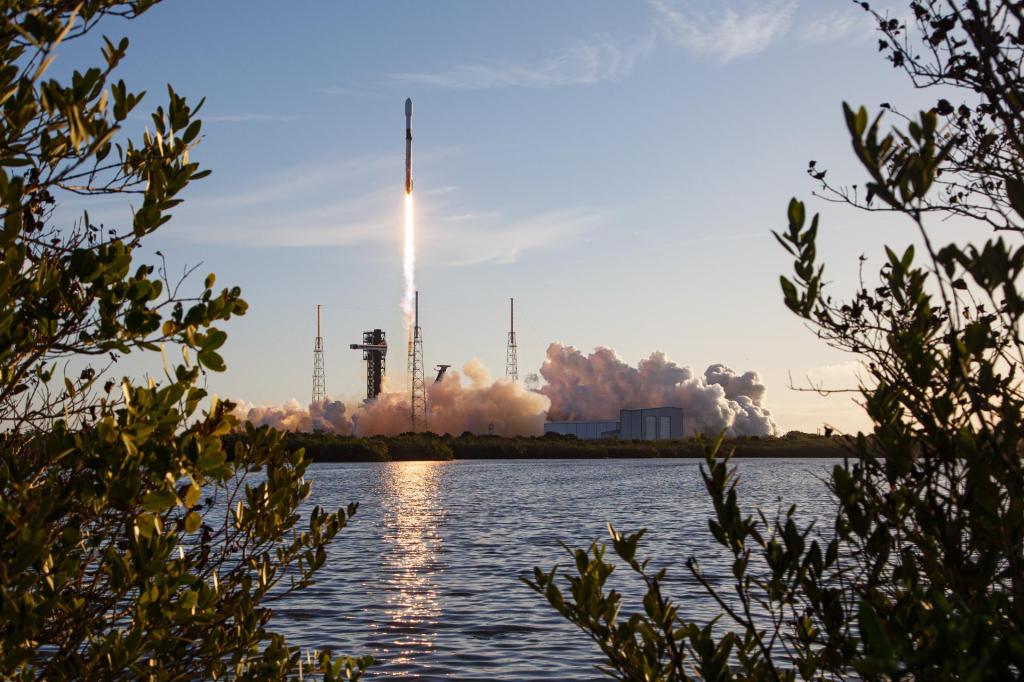
The ESCAPADE spacecraft launched from Cape Canaveral Space Force Station in Florida on November 13, 2025. Instead of a direct path to Mars, the spacecraft entered a loiter orbit around Lagrange point 2, a gravitational balance point located about a million miles from Earth. This strategic approach allowed them to return to Earth for the flyby when conditions were favorable for the slingshot maneuver.
Jeff Parker, lead mission designer at Advanced Space, noted that this orbiting strategy allows for greater flexibility in launch timing and utilizes Earth’s gravity to facilitate the journey to Mars, avoiding the traditional two-year wait for optimal planetary alignment.
Scientific Objectives and Future Operations
Following the successful flybys, the ESCAPADE spacecraft are now on a ten-month journey to Mars, with planned orbit insertion burns on September 7 and September 9, 2027. Once they reach Mars, the spacecraft will work in tandem to study the solar wind’s interaction with the Martian environment, which is crucial for understanding atmospheric loss on the planet.
Michele Cash, program scientist for ESCAPADE, emphasized that insights gained from the solar wind’s effects could enhance preparations for future human missions to Mars. During their journey, the spacecraft have already begun collecting scientific observations as they traversed through Earth’s magnetotail, furthering their research goals.
Innovative Collaboration and Mission Legacy
Upon reaching Mars, each spacecraft will execute an engine burn to enter orbit, followed by a period of maneuvering to establish a scientific formation. This mission will be the first to coordinate observations from two orbiters around Mars, allowing for simultaneous study of the planet’s environment from different perspectives.
ESCAPADE is funded by NASA’s Heliophysics Division and is part of the SIMPLEx program, which promotes innovative solar system exploration with smaller budgets. The mission is led by the Space Sciences Laboratory at the University of California, Berkeley, in collaboration with several key partners, including Rocket Lab and NASA’s Goddard Space Flight Center.
Source: NASA