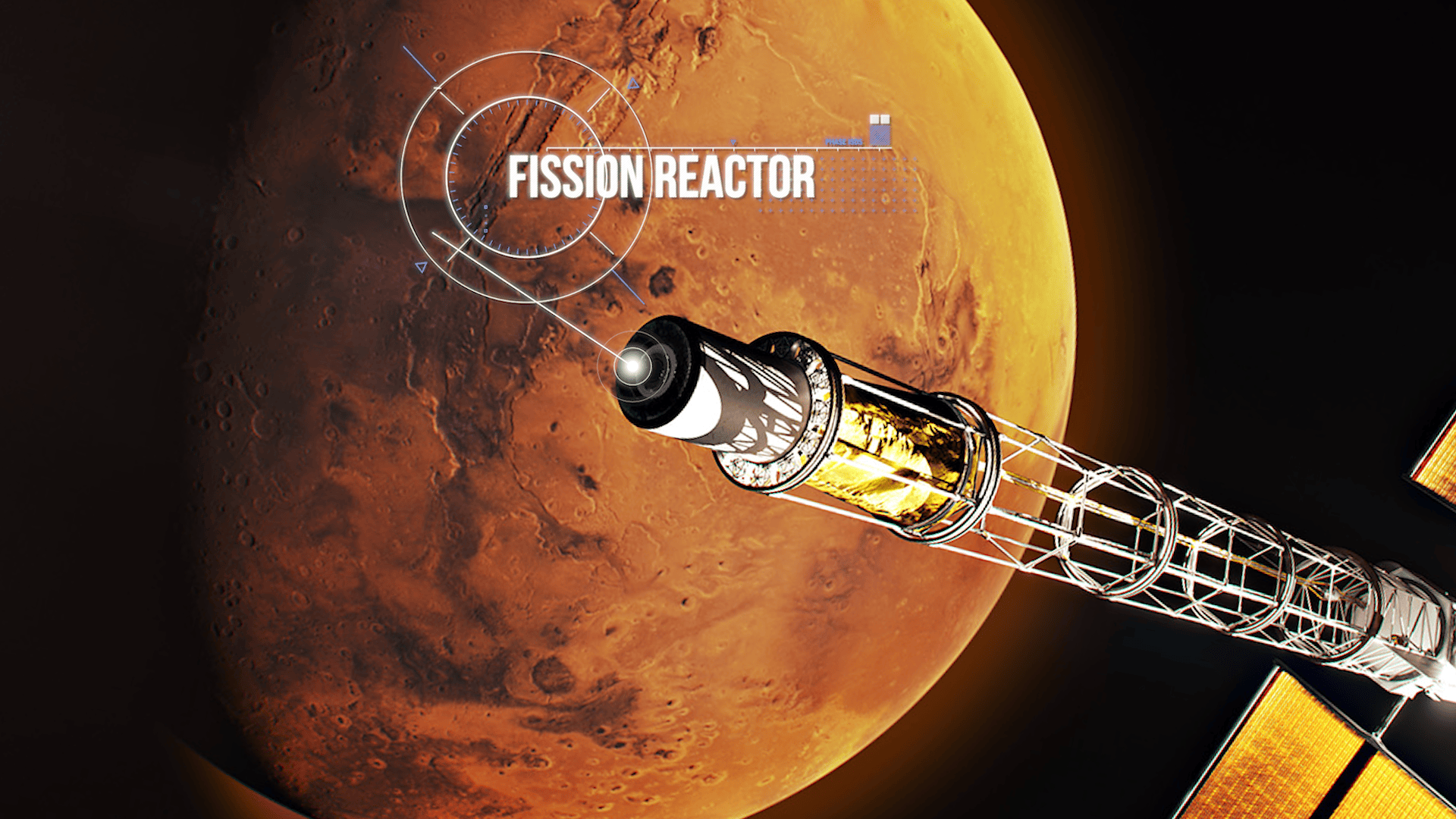
Nasa has announced significant progress on its Space Reactor-1 (SR-1) Freedom mission, which aims to be the first fission-powered spacecraft to travel beyond Earth’s orbit. The spacecraft is set to launch in late 2028 and will carry a science payload called SkyFall to Mars.
Mission Overview
The SR-1 Freedom mission will demonstrate nuclear electric propulsion in deep space, a milestone for space exploration. NASA has taken important contract actions to reduce technical risks and maintain the momentum necessary for the mission. Steve Sinacore, program director for SR-1 Freedom, emphasized that these actions strengthen collaboration among partners and lay a solid foundation for the spacecraft’s development.
Nuclear Power Module Development
The spacecraft’s nuclear power module, located at the end of its boom, will feature a reactor that generates heat through nuclear fission, which is then converted into electricity to power the spacecraft’s systems and propulsion. Sierra Lobo Inc. has been contracted to provide the closed Brayton cycle power conversion system, essential for this process. This work will take place under a contract awarded in 2024 and will support NASA’s Glenn Research Center in Cleveland.
Safety and Oversight
NASA, in collaboration with the Department of Energy (DOE), is prioritizing safety throughout the design and development of the SR-1 Freedom spacecraft. This includes interagency safety reviews and continuous oversight. The nuclear reactor will remain inactive until the spacecraft has left Earth orbit, ensuring additional safety measures are in place.
Scientific Goals
Once operational, SR-1 Freedom will deliver three Mars helicopters, evolved from the Ingenuity design, under the SkyFall mission. These helicopters will gather scientific data, explore various zones, and identify potential water sources on Mars, contributing to the future of deep space exploration and enhancing the capabilities of NASA’s Moon Base.
Source: NASA