NASA’s Hubble Space Telescope has captured an image showcasing a gravitational lens, a phenomenon that aids in the preparation for observations with the upcoming Nancy Grace Roman Space Telescope. The image features a spiral galaxy alongside an elliptical galaxy acting as a lens, distorting and magnifying the light from a distant background galaxy.
Gravitational Lensing Explained
Gravitational lensing occurs when the mass of a foreground object, such as a galaxy, warps spacetime, causing light from more distant objects to bend around it. This particular observation highlights a foreground elliptical galaxy located approximately 4.5 billion light-years away, with the background galaxy situated nearly eight billion light-years from Earth. The resulting configuration creates an arc-counterarc pair, where the background galaxy is visible as two distinct arcs on either side of the foreground galaxy.
Significance of the Discovery
The strength of the gravitational lensing effect is contingent on the mass of the foreground galaxy; a more massive galaxy results in a greater distortion of light. Researchers study these distortions to estimate the mass of the foreground galaxy and its dark matter content, as visible matter alone cannot account for the observed gravitational effects. This research plays a vital role in understanding dark matter, which constitutes the majority of mass in the universe.
Collaboration Between Hubble and Roman
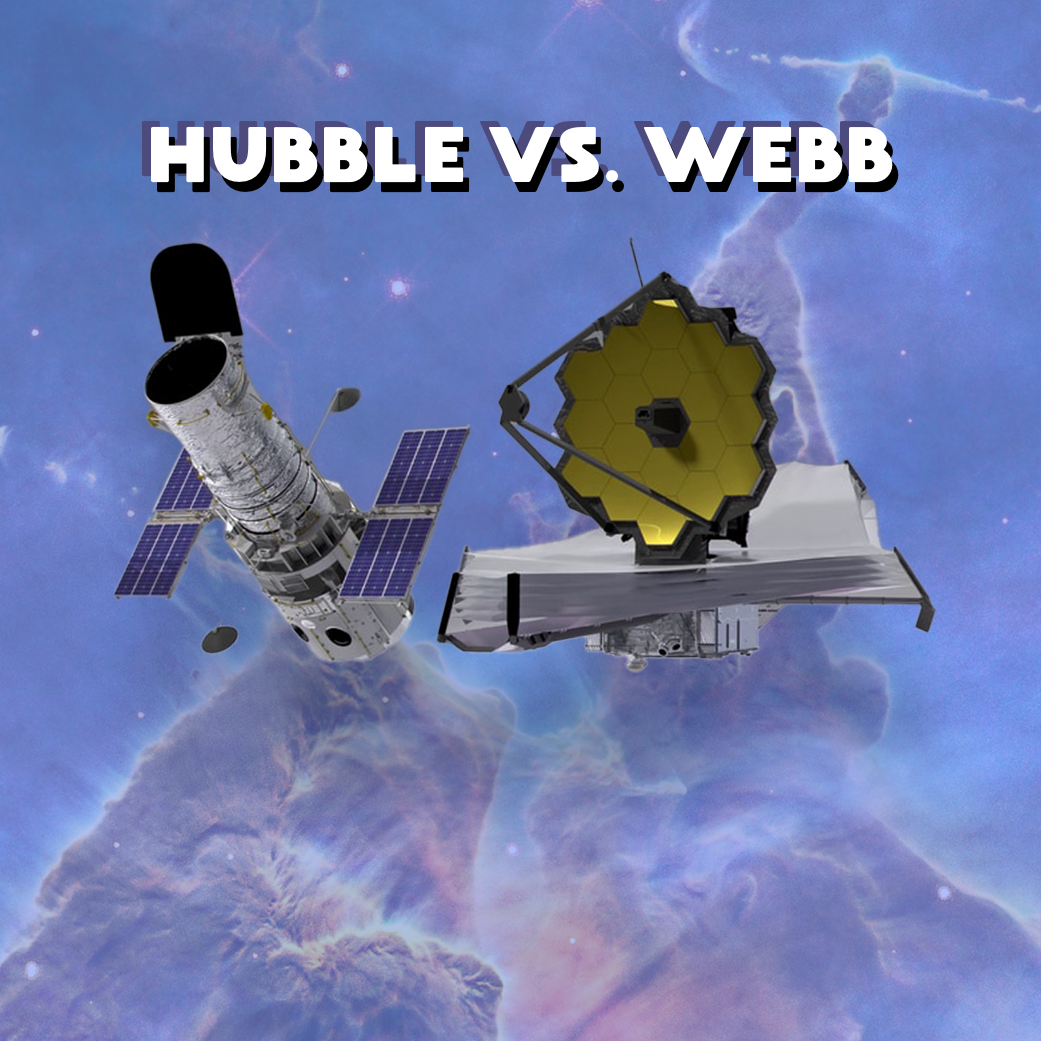
Hubble observes celestial objects primarily in visible and ultraviolet light, while the Roman Space Telescope will focus on infrared wavelengths. Hubble’s high-resolution images complement Roman’s wider field of view, allowing the two telescopes to collaborate effectively in astronomical studies. The gravitational lens images captured by Hubble will serve as a foundation for analyzing dark matter in foreground galaxies, which will be further explored by Roman’s broader observational capabilities.
As astronomers continue to leverage Hubble’s sharp imagery for computer modeling, they aim to enhance their analysis of gravitational lensing effects and prepare for future Roman observations. Hubble’s ability to provide detailed views of individual gravitational lenses will support Roman in gathering a more extensive dataset.
Source: NASA