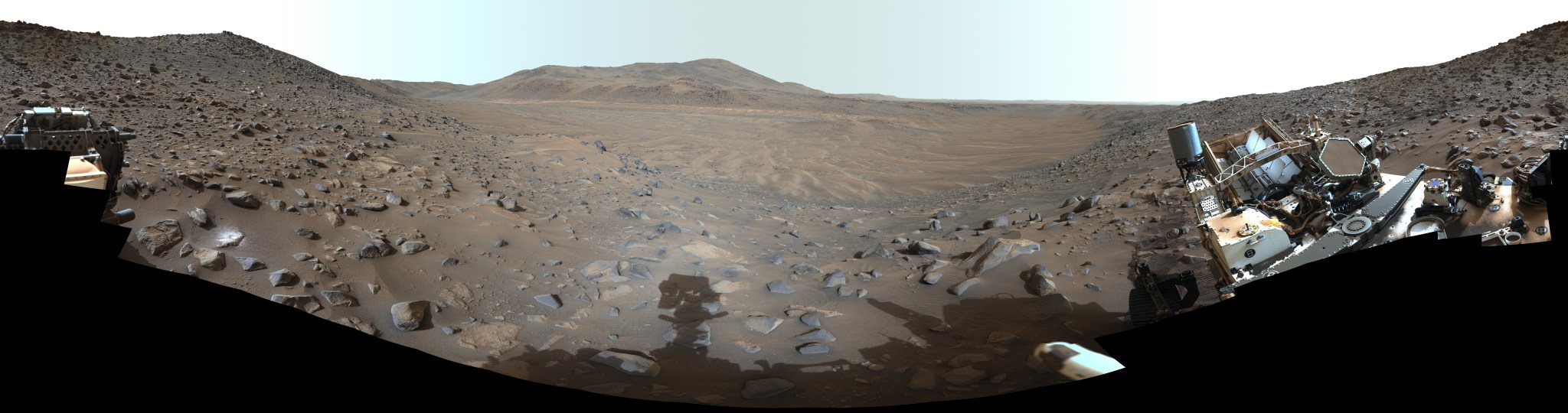
NASA’s Perseverance Mars rover has gathered important data on Martian dust that could influence future spacesuit and habitat designs for missions to Mars. The findings, which will be published in the Proceedings of the National Academy of Sciences, highlight the health implications of fine and ultrafine dust particles that can penetrate human lungs and enter the bloodstream.
Significance of the Research
Over the course of 1,645 Martian days, Perseverance analyzed dust particles that adhered to samples of spacesuit materials onboard the rover. The research aims to inform dust-removal procedures and improve crew health standards, according to Lindsay Hays, acting director of the Planetary Science Division at NASA Headquarters in Washington. She noted that understanding dust challenges has been a focus since the Apollo missions.
During the Apollo missions, lunar dust caused issues such as scratched visors and symptoms resembling hay fever among astronauts. In contrast, Martian dust, although less abrasive due to its rounded nature, is enriched in sulfur, chlorine, and iron, and is known to cause regional and global dust storms that keep it suspended in the atmosphere.
Details on Dust Measurements
The rover carries five samples of spacesuit material, which were used to calibrate instruments designed to measure dust particles. The SHERLOC and PIXL instruments helped detect particles as small as 100 nanometers, significantly smaller than previously measured sizes. The research found that static electricity influences which dust particles stick to various materials, with finer particles remaining adhered for extended periods.
Scott VanBommel, a Perseverance scientist and lead author of the study, expressed the importance of these measurements, noting that the smallest particles pose the greatest challenges for human support systems. The findings also revealed that some materials are better than others at resisting dust accumulation, which could lead to better material choices for future spacesuits and habitats.
Health Implications of Martian Dust
On Earth, fine airborne particles below 2.5 micrometers have been linked to various health problems, as they can reach deep into the lungs. Martian dust, primarily composed of silicate minerals, also contains reactive compounds that may pose health risks depending on the quantity and duration of exposure. The PIXL results represent the first on-site measurements of fine and ultrafine particles on Mars, which could aid in establishing safe dust exposure practices for astronauts.
NASA is currently exploring various solutions to manage extraterrestrial dust, utilizing ground test facilities and previous lunar missions to prepare for future Mars explorations. In March 2025, the agency tested an Electrodynamic Dust Shield on the Moon, which aimed to mitigate dust issues.
Perseverance’s Role in Mars Exploration
Managed by Caltech, the Jet Propulsion Laboratory (JPL) oversees the operations of the Perseverance rover as part of NASA’s Mars Exploration Program. In addition to searching for signs of ancient microbial life, the mission includes technology demonstrations geared towards preparing for human exploration of Mars.
For more information about the Perseverance rover, NASA provides resources detailing its mission objectives and findings.
Source: NASA