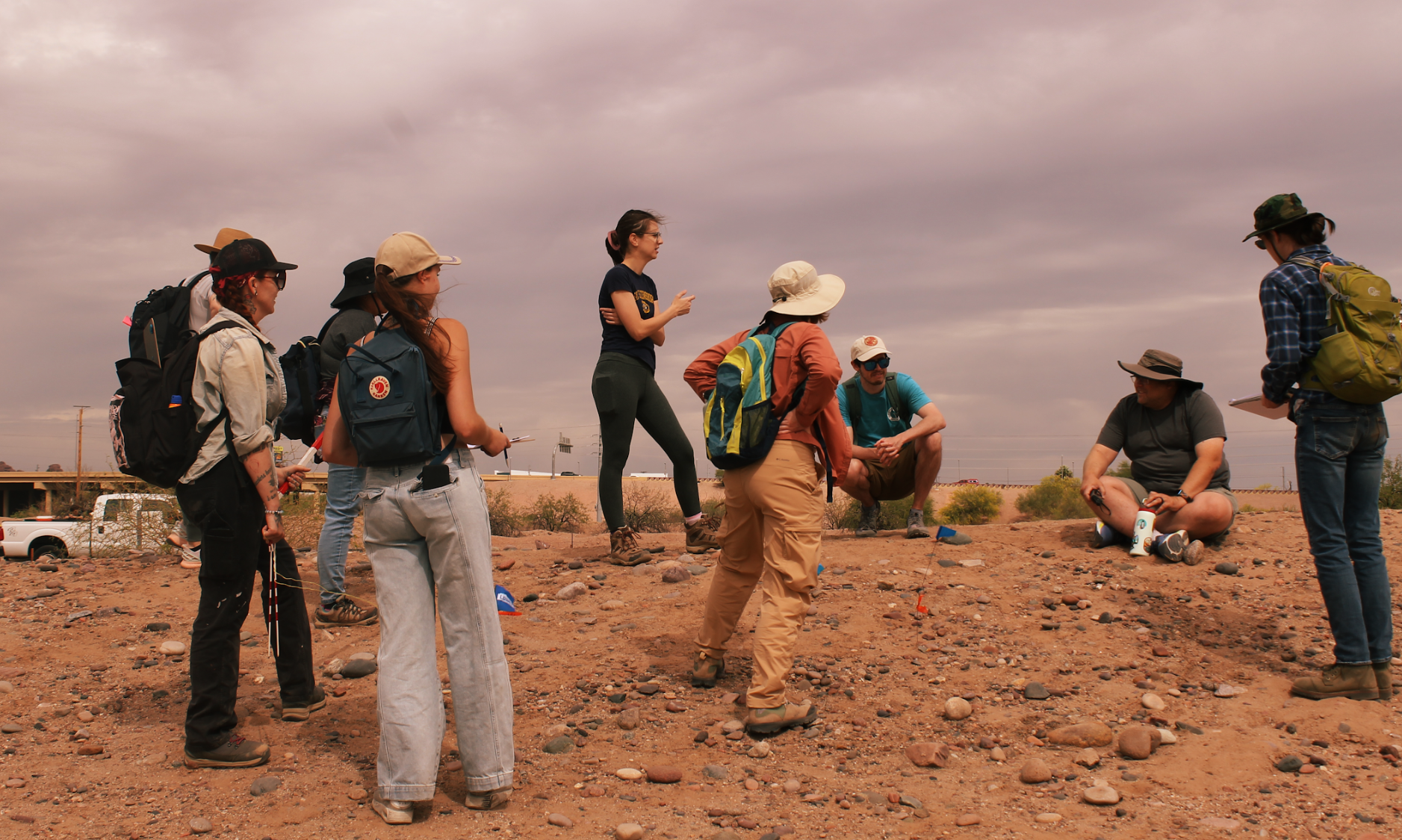
Arizona State University’s Archaeological Field School at S’eḏav Va’aki in Phoenix offers students a unique opportunity to engage in archaeological fieldwork close to home. This innovative program aims to provide accessible training for aspiring archaeologists while connecting them with the local community.
Local Training Opportunities
Typically, students pursuing archaeology envision traveling to far-flung locations for field school experiences. However, the ASU program at S’eḏav Va’aki allows students to gain practical skills without leaving the Phoenix area. Launched in collaboration with the city of Phoenix and local Indigenous communities, the program was designed to address the need for affordable field school options while documenting archaeological resources in the area.
Located on the ancestral lands of the O’Odoham, the S’eḏav Va’aki Museum serves as a significant site linked to the histories of Indigenous groups, including the Salt River Pima-Indian Community and the Gila River Indian Community. The initiative aims to provide students with essential training in archaeological methods, legal frameworks, and ethical considerations, particularly in relation to tribal consultation.
Building Community Connections
Matthew Peeples, an associate professor and co-director of the program, emphasized the importance of local engagement. “Working locally makes field training more accessible,” he said. This approach not only facilitates hands-on experience but also allows students to build relationships within the local archaeological community, which can be beneficial for future job opportunities.
Former field school participant Mackenzie Wright highlighted the program’s impact on her career path. She appreciated the chance to gain firsthand experience in archaeology while learning about her local history. Another participant, Asa Andreas, noted that the field school reinforced the importance of cultural awareness in professional practices.
Collaborative Research Efforts
The field school has also contributed to significant archaeological research. Students worked on documenting the Portland Tract, a historic Black neighborhood located on the museum’s grounds. Their research involved creating recording systems for historical resources, which culminated in a publication in the International Journal of Historical Archaeology.
Through this project, students were able to combine their academic learning with practical skills, understanding both the intellectual and physical aspects of archaeology. Matthew Kroot, another co-director of the field program, remarked on the dual nature of archaeological education, highlighting the importance of hands-on experience in comprehending the past.
Emphasizing Indigenous Perspectives
Reylynne Williams, a tribal historic preservation officer, collaborates with the field school to ensure that the curriculum reflects Indigenous perspectives and engages the community. She noted the importance of educating future archaeologists about respecting ancestral sites and the laws governing archaeological work.
The program has not only provided students with critical skills but has also fostered a deeper understanding of the ethical responsibilities archaeologists have toward Indigenous communities. By integrating community collaboration and cultural awareness into their training, participants are better prepared for careers in archaeology.
Source: Arizona State University