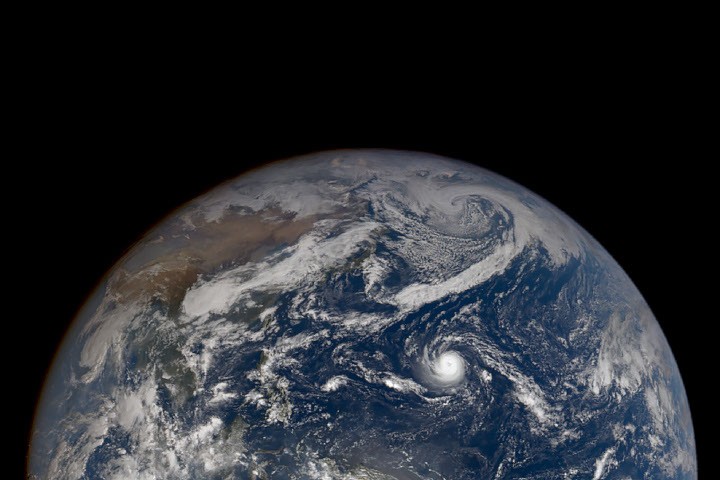
The first named storm of the 2026 North Indian Ocean cyclone season, dubbed Arnab, formed in the Bay of Bengal on October 25, marking a late start for the region’s cyclone activity, which typically begins earlier in the year.
Storm Development and Impact
On October 26, the Visible Infrared Imaging Radiometer Suite (VIIRS) aboard NOAA-20 captured a nighttime image of Arnab, which at that time was generating sustained winds of approximately 140 kilometers (85 miles) per hour, according to the India Meteorological Department (IMD). The storm made landfall along the Andhra Pradesh and Yanam coast in the early hours of October 28, with winds reported at 130 kilometers per hour. IMD categorized Arnab as a “very severe cyclonic storm,” comparable to a Category 1 hurricane on the Saffir-Simpson scale. The storm struck between Bapatla and Visakhapatnam, an area densely populated with cities, farmland, and fishing communities.
Reports indicate that Arnab caused significant damage, uprooting trees, flooding agricultural land and homes, and disrupting fishing, transportation, and power services. In preparation for the storm, Indian authorities evacuated tens of thousands of residents from at-risk coastal areas.
El Niño Influence
The occurrence of Arnab coincides with an El Niño event, characterized by warmer-than-normal sea surface temperatures in the equatorial Pacific. This climate phenomenon, which typically occurs every two to seven years, has been shown to influence global weather patterns, including the behavior of tropical cyclones. Research suggests that during El Niño years, the Bay of Bengal typically experiences less frequent and less intense tropical cyclone activity.
This storm serves as a reminder of the complex interactions between climate patterns and weather events, underscoring the ongoing challenges faced by coastal communities in the region.
NASA Earth Observatory contributed to the imagery and analysis related to this storm, highlighting the importance of satellite observations in understanding and monitoring such natural events.
Source: NASA